
How to Build an AI-Powered Sales Pipeline
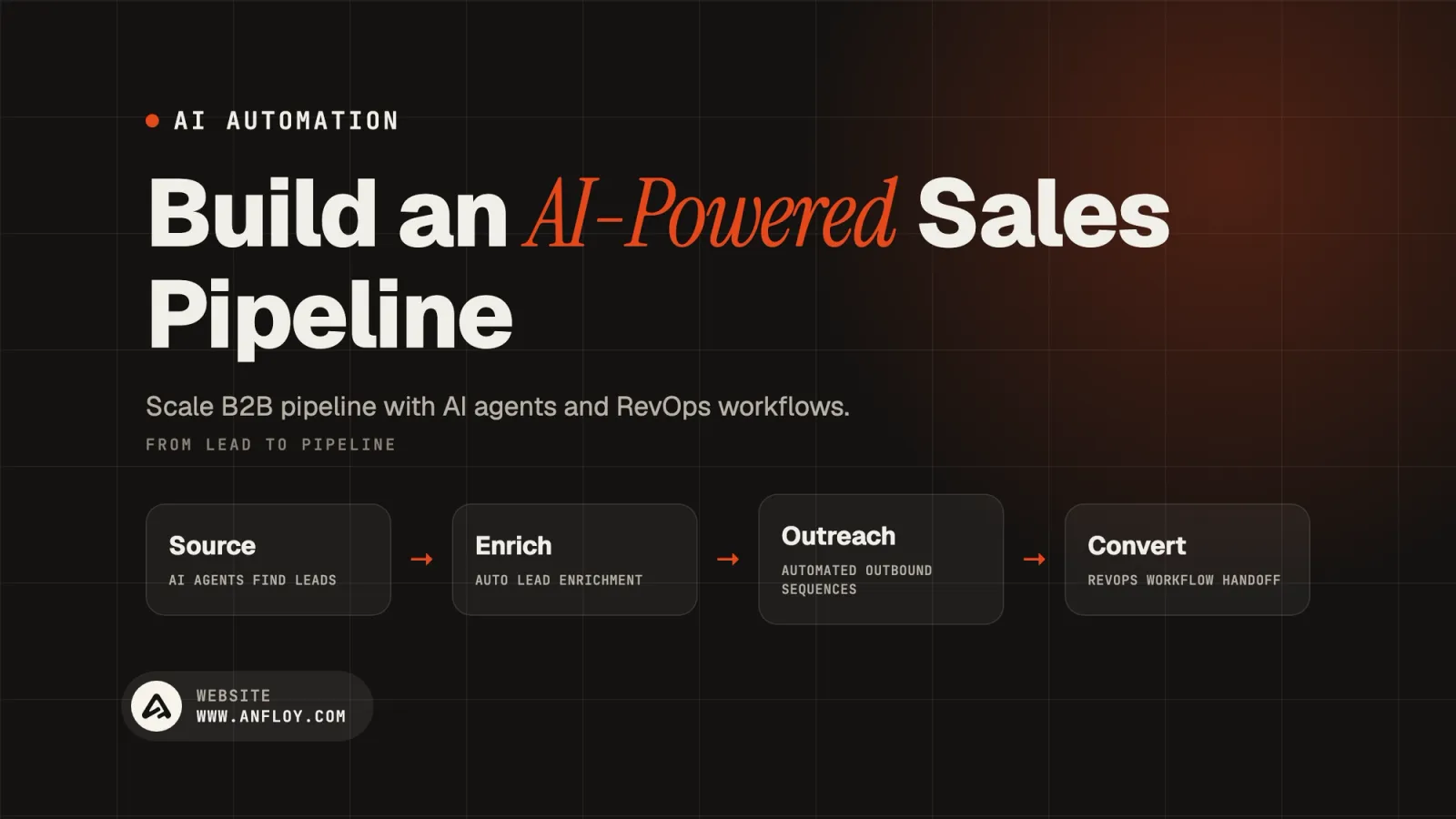
Learn how B2B SaaS companies build AI-powered sales pipelines using AI agents, outbound automation, lead enrichment, RevOps workflows to scale pipeline generation efficiently.
On this page
- What Is an AI-Powered Sales Pipeline?
- Why traditional sales pipelines no longer scale?
- The Shift From Sales Automation to GTM AI Systems
- Core Components of an AI-Powered Sales Pipeline
- How do AI agents improve sales operations?
- AI-Powered Sales Pipelines vs Traditional Sales Stacks
- Why Most AI Sales Tools Fail?
- The Importance of Ownership in GTM AI Systems
- How to build an AI-powered sales pipeline?
- What common mistakes do companies make?
- What is the future of AI-powered sales pipelines?
- Conclusion
Traditional sales pipelines are breaking.
Modern B2B buyers move faster, research independently, and expect personalized outreach long before they speak with a sales rep.
At the same time, SaaS companies are drowning in operational complexity.
Sales teams are juggling:
- outbound platforms
- CRMs
- enrichment tools
- intent data providers
- AI SDR tools
- analytics dashboards
- sequencing platforms
- and manual workflows
The result is usually the same:
More software. More complexity. More operational drag.
Most pipelines are still heavily dependent on human coordination.
SDRs manually research prospects. RevOps teams maintain fragile automations. Sales reps waste hours updating CRMs and prioritizing accounts.
This is exactly why AI-powered sales pipelines are becoming a major competitive advantage for B2B SaaS companies.
Instead of relying on disconnected tools and repetitive manual work, AI systems can:
- Identify buying signals
- Enrich accounts automatically
- Prioritize leads
- Generate personalized outreach
- Coordinate workflows
- Update CRMs
- and orchestrate pipeline operations across the entire GTM system
The biggest difference is this:
Traditional sales pipelines are workflow-based. AI-powered sales pipelines are intelligence-driven.
At Anfloy, the focus is on building custom GTM AI systems that companies actually own.
That includes:
- AI outbound infrastructure
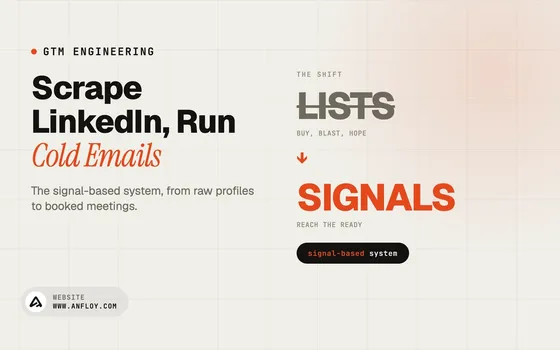
- signal-based prospecting systems
- AI lead generation and enrichment workflows
- AI sales automation
- RevOps orchestration
- and GTM AI agents are integrated directly into your stack
What Is an AI-Powered Sales Pipeline?
An AI-powered sales pipeline is a sales system that uses AI agents, automation, operational workflows, and data orchestration to manage pipeline generation and sales execution.
Instead of relying heavily on manual work, AI systems coordinate:
- Lead sourcing
- Enrichment
- Qualification
- Prioritization
- Personalization
- Outreach
- CRM updates
- and sales workflows
Traditional pipelines depend on humans moving information between systems. AI-powered pipelines reduce that operational friction. For example, instead of an SDR manually researching accounts, an AI system can:
- Detect buying signals
- Enrich company data
- Analyze ICP fit
- Identify decision-makers
- Generate personalized messaging
- Trigger outbound workflows
- Update CRM records
- Notify the sales team
- and continuously optimize pipeline prioritization
That is not basic automation. That is custom AI automation designed around modern GTM workflows.
Why traditional sales pipelines no longer scale?
Most SaaS sales teams eventually hit operational bottlenecks. The company grows. More leads enter the pipeline. More tools get added. More workflows appear.
Then execution slows down.
What are the common sales pipeline problems faced by the sales team?
Most B2B SaaS companies experience issues like:
- SDRs manually researching prospects
- Inconsistent lead qualification
- slow outbound execution
- CRM hygiene problems
- fragmented GTM data
- disconnected enrichment tools
- poor personalization at scale
- delayed lead routing
- inefficient RevOps workflows
- outbound sequences with low response rates
- pipeline leakage between teams
Most companies respond by adding more software. But the issue is usually not the lack of tools. The issue is operational coordination.
Modern sales pipelines require:
- real-time intelligence
- contextual reasoning
- workflow orchestration
- and automated execution
This is why AI-powered GTM systems are replacing traditional static workflows.
The Shift From Sales Automation to GTM AI Systems
Traditional sales automation follows rules. AI-powered GTM systems operate with context. That distinction changes everything.
Old automation systems work like this:
If lead submits form → assign SDR.
AI-powered sales systems work like this:
- Detect buying intent
- analyze account behavior
- enrich company data
- score ICP fit
- prioritize opportunities
- generate personalized outreach
- coordinate outbound workflows
- notify sales teams
- and optimize execution dynamically
This is the difference between automation and orchestration.
Modern GTM infrastructure combines:
- AI agents
- enrichment system
- CRMs
- APIs
- workflows
- intent data
- outbound platforms
- and operational intelligence
Together, these systems create a scalable sales infrastructure.
Core Components of an AI-Powered Sales Pipeline
1. Signal-Based Prospecting
Modern outbound is no longer volume-based and increasingly depends on AI lead generation systems driven by buying signals.
It is signal-based. The best pipelines identify companies actively showing buying intent.
Signals may include:
- funding announcements
- hiring activity
- website visit
- content engagement
- technology adoption
- LinkedIn activity
- CRM interactions
- product usage data
- and outbound engagement
AI systems monitor these signals automatically and prioritize high-intent accounts.
This dramatically improves outbound timing and conversion rates.
At Anfloy GTM AI Agents, signal-based prospecting systems are designed around real GTM workflows instead of generic lead scraping.
2. AI Lead Enrichment
Lead enrichment is one of the most time-consuming parts of outbound operations.
Traditional workflows often require SDRs to:
- research companies
- identify contacts
- gather data manually
- verify information
- and update CRM systems
AI-powered enrichment systems automate this entire process.
Modern enrichment workflows can:
- identify decision-makers
- analyze company fit
- enrich firmographic dat
- validate emails
- detect buying signals
- and update CRM records automatically
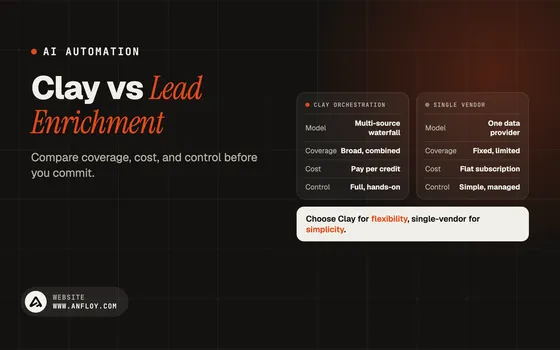
Platforms like Clay help with enrichment workflows, but high-performing GTM systems usually require custom orchestration and AI strategy consulting beyond standalone enrichment tools.
3. AI-Powered Lead Scoring
Traditional lead scoring is usually static. AI lead scoring is dynamic.
Instead of assigning fixed point systems, AI evaluates:
- behavioral signals
- engagement patterns
- company attributes
- ICP similarity
- outbound engagement
- and contextual intent
This helps sales teams prioritize accounts more effectively.
The result:
- better pipeline quality
- faster response times
- and improved sales efficiency
4. Personalized AI Outbound
Generic outbound is dying. Modern buyers instantly ignore templated sales emails. AI-powered sales systems improve personalization at scale by analyzing:
- company context
- recent activity
- ICP patterns
- role-specific pain points
- and operational signals
AI systems can generate:
- personalized cold emails
- LinkedIn messaging
- outbound sequences
- follow-ups
- and contextual prospect messaging
The key difference is relevance. The best AI outbound systems do not just automate messaging. They automate context.
5. CRM and RevOps Orchestration
Most pipeline inefficiencies happen between systems. CRMs become outdated. Lead routing breaks. Reporting becomes fragmented.
AI orchestration solves this by coordinating workflows automatically across:
- HubSpot
- Salesforce
- Slack
- enrichment tools
- outbound platforms
- analytics systems
- and internal workflows
This reduces operational drag significantly.
AI-powered RevOps systems help:
- Maintain CRM automation workflows
- The route leads intelligently
- automate follow-ups
- update lifecycle stages
- trigger workflows
- and improve pipeline visibility
How do AI agents improve sales operations?
AI agents function like operational teammates inside the sales pipeline. They do not simply automate tasks. They coordinate execution.
Modern GTM AI agents can:
- monitor signals
- prioritize opportunities
- analyze data
- generate outreach
- trigger workflows
- update systems
- and support sales execution automatically
This creates operational leverage for lean sales teams.
Instead of hiring more SDRs to handle repetitive tasks, companies deploy AI systems that scale execution more efficiently.
AI-Powered Sales Pipelines vs Traditional Sales Stacks
| Traditional Sales Pipeline | AI-Powered Sales Pipeline |
|---|---|
| Manual prospect research | AI-driven enrichment |
| Static lead scoring | Dynamic AI scoring |
| Generic outbound | Personalized outreach |
| Human workflow coordination | AI orchestration |
| Fragmented systems | Unified operational layer |
| Reactive sales execution | Signal-based execution |
| CRM maintenance overhead | Automated CRM updates |
| Tool-heavy workflows | Integrated AI systems |
This is why many SaaS companies are moving away from disconnected sales stacks toward AI-native GTM infrastructure.
Why Most AI Sales Tools Fail?
Most AI sales tools solve only one piece of the workflow, which is why many companies compare solutions like Anfloy vs Zapier, Anfloy vs Clay when evaluating scalable GTM infrastructure. That creates major limitations.
Many companies discover:
- AI SDR tools sound robotic
- Generic AI outreach lacks context
- Workflows break under complexity
- Automation tools cannot reason dynamically
- Systems require constant manual oversight
- and data becomes fragmented across platforms
The issue is not AI itself. The issue is disconnected infrastructure.
High-performing AI sales pipelines require orchestration across:
- workflows
- data systems
- AI reasoning layers
- enrichment
- outbound execution
- and CRM operations
That is why custom AI systems outperform generic SaaS tools over time.
The Importance of Ownership in GTM AI Systems
Most AI sales platforms create dependency.
You rent:
- the workflows
- the operational logic
- the AI infrastructure
- and the execution layer
That creates long-term limitations. If pricing changes or workflow flexibility becomes restricted, your GTM operations become trapped inside someone else’s platform. Custom AI infrastructure changes that model entirely.
Instead of renting operational systems, companies build GTM infrastructure that they actually control using custom workflows, as explained in how Anfloy works.
That means
- The workflows belong to your team
- The integrations remain inside your environment
- The operational logic becomes a long-term company asset
- and the system evolves with your GTM motion
At Anfloy, AI sales systems are deployed directly into the client’s infrastructure from day one.
No lock-in. No recurring platform dependency.
How to build an AI-powered sales pipeline?
Step 1: Identify pipeline bottlenecks
Start by identifying repetitive operational tasks.
Common bottlenecks include:
- manual enrichment
- outbound research
- CRM updates
- lead routing
- reporting workflows
- and personalization challenges
AI automation services should solve operational friction first before adding more software.
Step 2: Centralize GTM Data
AI systems require structured operational data.
This includes:
- CRM systems
- enrichment data
- website activity
- outbound engagement
- and customer signals
Without centralized data, AI workflows become unreliable.
Step 3: Build Signal-Based Workflows
Modern sales pipelines should prioritize:
- intent signals
- buying behavior
- ICP matching
- and engagement analysis
This creates more intelligent pipeline prioritization.
Step 4: Deploy AI Agents
AI agents should handle:
- enrichment
- scoring
- outbound personalization
- workflow coordination
- CRM updates
- and reporting automation
This creates scalable operational leverage.
Step 5: Continuously Optimize the System
AI-powered sales pipelines improve over time.
The best systems continuously analyze:
- response rates
- conversion performance
- engagement signals
- workflow efficiency
- and outbound effectiveness
Optimization becomes part of the infrastructure.
What common mistakes do companies make?
Buying too many AI tools
Most teams stack disconnected AI products instead of building centralized workflow automation systems across their GTM operations.
This creates:
- fragmented workflows
- overlapping systems
- inconsistent outputs
- and operational inefficiency
Treating AI like a shortcut
AI is not magic. Strong sales systems still require:
- workflow design
- operational logic
- integrations
- monitoring
- and optimization
Focusing on volume instead of signals
Modern outbound is not about sending more emails. It is about identifying the right buyers at the right time with the right context.
What is the future of AI-powered sales pipelines?
Sales operations are moving toward AI-native infrastructure. The future pipeline will rely less on:
- manual SDR workflows
- disconnected SaaS stacks
- and repetitive operational tasks
Instead, AI systems will:
- Orchestrate workflows
- Coordinate the GTM operation
- AI-powered lead generation
- Analyze intent signals
- Personalize outreach
- and support revenue teams automatically
The companies that win will not necessarily use the most AI tools. They will build the best operational systems.
Conclusion
Traditional sales pipelines were built for a different era.
An era where:
- Outbound was volume-driven
- Buyer journeys were simpler
- SaaS stacks were smaller
- and sales teams could manage workflows manually
That model no longer scales efficiently.
Modern B2B SaaS companies operate in highly competitive markets where:
- Buyers expect personalization
- GTM execution moves faster
- Operational complexity grows rapidly
- and fragmented workflows slow down pipeline growth
This is why AI-powered sales pipelines are becoming a core competitive advantage.
The companies generating the strongest pipelines today are not simply adding more sales tools.
They are building intelligent GTM systems powered by AI.
That includes:
- Signal-based prospecting
- AI lead enrichment
- Personalized outbound automation
- Dynamic lead scoring
- CRM orchestration
- Workflow automation
- and AI agents coordinating execution across the sales process
The biggest shift is not automation alone. It is operational intelligence.
Instead of relying on humans to manually coordinate sales operations, AI systems can analyze, prioritize, personalize, and execute workflows automatically across the GTM stack.
That creates:
- faster pipeline generation
- improved outbound efficiency
- better lead qualification
- cleaner operational workflows
- and scalable revenue infrastructure
Most importantly, ownership matters. Many AI sales platforms lock companies into rigid systems and recurring dependencies. But the long-term GTM advantage comes from owning the infrastructure that powers your sales workflows.
That means:
- Your workflows stay inside your company
- Your operational logic becomes a long-term asset
- and your GTM systems evolve around your business instead of platform limitations
At Anfloy, the focus is on helping B2B SaaS companies build an AI-powered sales infrastructure they actually own.
From:
- GTM AI Agents
- AI outbound systems
- lead enrichment workflows
- RevOps automation
- signal-based prospecting infrastructure
- and fully custom AI sales operations
Build scalable AI-powered pipeline systems designed around your GTM motion, not generic SaaS workflows.
Because the future of B2B SaaS sales is not just better automation. It is an AI-powered operational infrastructure that compounds over time.
Frequently Asked Questions
What is an AI-powered sales pipeline?
An AI-powered sales pipeline uses AI agents, workflows, automation, and operational intelligence to automate lead generation, qualification, outreach, CRM coordination, and pipeline execution.
How do AI sales pipelines improve outbound?
AI systems improve outbound by analyzing buying signals, enriching leads automatically, generating personalized messaging, prioritizing accounts, and coordinating workflows across GTM systems.
Are AI SDR tools enough for modern sales teams?
Most AI SDR tools solve isolated problems. High-performing sales pipelines require orchestration across enrichment, CRM systems, workflows, outbound execution, and operational intelligence.
How long does it take to build an AI-powered sales pipeline?
Focused AI sales systems can launch within days, while full GTM AI infrastructure with integrations and orchestration layers usually takes one to two weeks.
Should SaaS companies build custom GTM AI systems?
Yes. Custom GTM AI systems provide more flexibility, ownership, operational control, and scalability than relying entirely on disconnected third-party sales tools.
Let's build
what your
company needs.
Drop your email. We'll send The Custom Agent Blueprint on what we'd build first for a company like yours, before you ever take a meeting.