
10 Best Growth Engineering Software for GTM in 2026
I compare the best growth engineering software for GTM, including Clay, Apollo, n8n, HubSpot, Common Room, Hightouch, and more.
On this page
- What is growth engineering software for GTM?
- The growth engineering software stack I use
- How I evaluate growth engineering software?
- 10 Best growth engineering software for GTM
- 1. Clay
- 2. Apollo
- 3. n8n
- 4. HubSpot
- 5. Salesforce
- 6. Common Room
- 7. Hightouch
- 8. Gumloop
- 9. Salesloft
- 10. Gong
- How I choose the right growth engineering software?
- The growth engineering architecture I prefer
- Growth engineering software and ICP
- Growth engineering software and signal-based GTM
- Growth engineering software and AI agents
- How I build a growth engineering stack At Anfloy?
- My growth engineering software framework
- Conclusion
When I think about growth engineering for GTM, I do not think about adding another collection of marketing tools.
I think about building a revenue system that can find opportunities, understand accounts, make decisions, execute actions, and learn from outcomes.
That requires software across several layers.
I need tools for:
- data enrichment
- account intelligence
- workflow automation
- signals
- CRM operations
- outbound
- personalization
- AI agents
- data movement
- analytics
- experimentation
The important part is how these tools work together.
A GTM Engineer should not simply ask:
Which growth software has the most features?
I ask:
Which software helps me turn a GTM idea into a repeatable system?
That changes the way I evaluate the stack.
A traditional growth workflow might look like:
Find Leads
    ↓
Research
    ↓
Write Emails
    ↓
Send Emails
    ↓
Update CRM
A growth-engineered workflow looks more like:
SIGNAL
   ↓
IDENTIFY ACCOUNT
   ↓
ENRICH
   ↓
QUALIFY
   ↓
SCORE
   ↓
RESEARCH
   ↓
PERSONALIZE
   ↓
ROUTE
   ↓
EXECUTE
   ↓
MEASURE
   ↓
LEARN
That second system is what I want my software stack to support.
What is growth engineering software for GTM?
I define growth engineering software for GTM as software that helps me build, automate, measure, and optimize revenue workflows across marketing, sales, RevOps, and customer growth.
The key word is engineering.
I am not just using software to perform a task.
I am using software to create a system that can perform the task repeatedly.
GTM Engineering itself is increasingly described as the practice of building revenue systems with data, AI, and workflow automation rather than running GTM manually.
For example:
Manual Growth

Rep researches account
       ↓
Rep updates CRM
       ↓
Rep writes message
       ↓
Rep sends outreach


versus:

Growth Engineering

Signal detected
       ↓
Account enriched
       ↓
ICP evaluated
       ↓
AI researches account
       ↓
Message generated
       ↓
Sequence triggered
       ↓
CRM updated
       ↓
Outcome measured
The second model is what I want to build.
The growth engineering software stack I use
I divide the stack into several layers.
GROWTH ENGINEERING STACK
|
+-- Data
|    +-- Enrichment
|    +-- Firmographics
|    +-- Technographics
|    +-- Contact Data
|
+-- Intelligence
|    +-- Signals
|    +-- Intent
|    +-- Account Research
|
+-- Orchestration
|    +-- Workflow Automation
|    +-- APIs
|    +-- AI Agents
|
+-- Execution
|    +-- Outbound
|    +-- Personalization
|    +-- Marketing Automation
|
+-- Systems
|    +-- CRM
|    +-- Data Warehouse
|
+-- Measurement
     +-- Analytics
     +-- Attribution
     +-- Experimentation
I do not necessarily need a different tool for every layer.
In fact, one of my goals as a GTM Engineer is to reduce unnecessary tool fragmentation.
How I evaluate growth engineering software?
I evaluate software based on what I can build with it.
1. API access
I want programmatic access wherever possible.
APIs allow me to connect tools to:
- CRM
- databases
- warehouses
- AI agents
- internal applications
- workflows
- webhooks
2. Workflow flexibility
I want conditional logic.
For example:
IF account fits ICP
AND buying signal exists
AND negative ICP = false

THEN
research account
AND create opportunity
AND route to sales
3. Data connectivity
The tool should not create another isolated database.
I want data to move between systems.
4. Automation
I care about whether the software can execute actions automatically.
5. AI support
Modern GTM software increasingly needs to support AI research, classification, personalization, and decision workflows.
6. Observability
I need to know:
- what happened
- why it happened
- when it happened
- what data triggered it
- whether the workflow succeeded
7. Scalability
A workflow that works for 50 accounts but breaks at 50,000 is not a reliable GTM system.
8. Cost
I consider:
- subscription cost
- API costs
- usage credits
- execution costs
- maintenance
- engineering time
The cheapest tool is not always the cheapest system.
10 Best growth engineering software for GTM
My current shortlist includes:
- Clay
- Apollo
- n8n
- HubSpot
- Salesforce
- Common Room
- Hightouch
- Gumloop
- Outreach / Salesloft
- Gong
I do not consider these direct replacements for one another.
Each solves a different layer of the growth engineering problem.
1. Clay
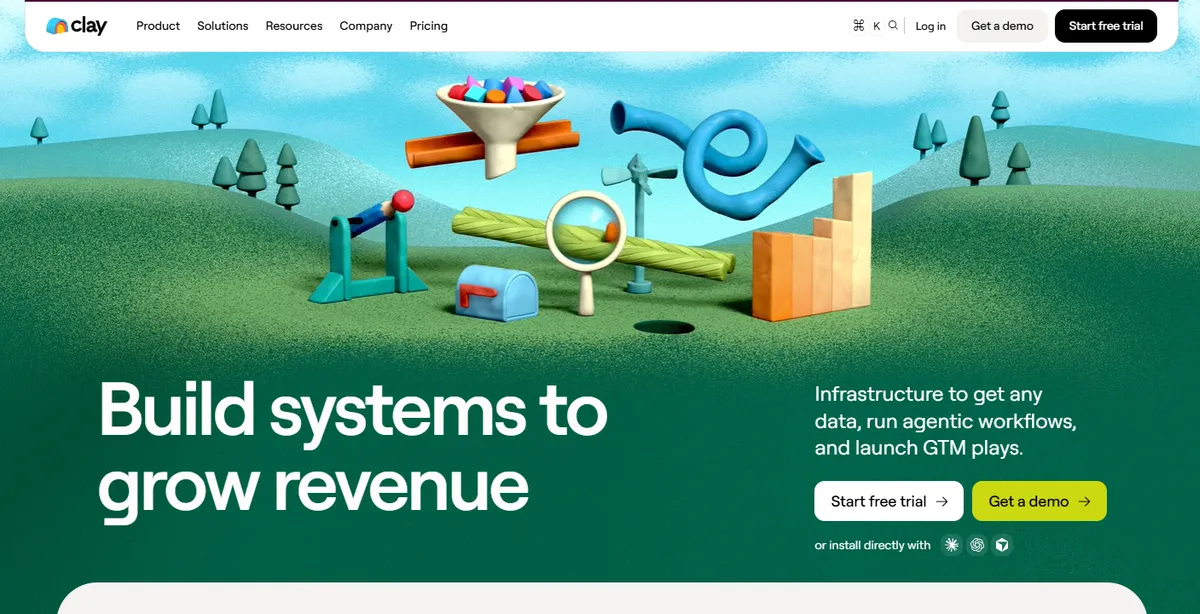
Best for: GTM Engineers who need enrichment, research, scoring, orchestration, and activation in one workflow layer.
Clay is one of the first tools I would evaluate when building a modern GTM engineering stack.
Its value is not just enrichment.
It combines data sources, AI research, transformation, scoring, and activation.
Clay currently describes its GTM platform as an orchestration layer that can connect more than 150 data sources and sync or trigger actions across GTM systems.
The architecture can look like:
CRM
 ↓
Clay
 ↓
Enrichment
 ↓
AI Research
 ↓
Scoring
 ↓
Personalization
 ↓
Outbound
 ↓
CRM
I particularly like Clay when I need to test a GTM hypothesis quickly.
For example:
Can I identify companies that recently hired five or more salespeople and personalize outreach based on their technology stack?
I can build the workflow, test it on a small sample, measure it, and then scale it.
That experimentation model is central to how GTM Engineering operates. Clay's own GTM Engineering materials describe the discipline as turning internal revenue problems into repeatable automated plays.
Where I use Clay?
I use it for:
- enrichment
- waterfall enrichment
- account research
- AI research
- ICP scoring
- negative ICP
- signal processing
- personalization
- outbound preparation
- CRM enrichment
Best fit
I would choose Clay when:
I need an orchestration layer that lets me build and iterate GTM systems quickly.
2. Apollo
Best for: Prospecting, contact data, enrichment, and outbound execution.
Apollo is useful when I want data and sales execution closer together.
I can use it for:
- company data
- contact data
- prospecting
- enrichment
- sequencing
- outbound
- sales workflows
Apollo's API supports both people and organization enrichment, which makes it useful as a data source inside a broader GTM system.
The advantage is simplicity.
Instead of building:
Data Provider
+
Contact Database
+
Sequencer
I can get multiple capabilities inside one platform.
Where I use Apollo?
I would use Apollo when the workflow looks like:
ICP
 ↓
Find Accounts
 ↓
Find Contacts
 ↓
Enrich
 ↓
Sequence
 ↓
Measure
It is particularly attractive for lean GTM teams.
Best fit
I would choose Apollo when:
I want prospecting, data, and outbound execution in one broader system.
3. n8n
Best for: Technical GTM Engineers who need flexible workflow orchestration.
n8n is different from Clay and Apollo.
It is not primarily a sales database.
It is a workflow automation layer.
That makes it extremely useful when I need to connect different systems.
For example:
Salesforce
    ↓
n8n
    ↓
Enrichment API
    ↓
AI Model
    ↓
Slack
    ↓
CRM


Or:

Webhook
 ↓
n8n
 ↓
Company Enrichment
 ↓
ICP Check
 ↓
AI Research
 ↓
Create Task
The biggest advantage is control.
I can build workflows around APIs rather than being limited to the workflows supported by one GTM platform.
Best fit
I would choose n8n when:
The problem is orchestration rather than data.
It is especially useful for GTM Engineers comfortable with APIs, webhooks, JSON, databases, and conditional workflows.
4. HubSpot

Best for: CRM-centered growth engineering.
HubSpot becomes particularly powerful when it is the center of the GTM system.
I can use it for:
- CRM
- marketing automation
- sales workflows
- lead management
- lifecycle stages
- reporting
- customer data
The advantage is that many GTM actions can happen close to the system of record.
For example:
Website Activity
 ↓
HubSpot
 ↓
Lead Qualification
 ↓
Workflow
 ↓
Sales Assignment
 ↓
Follow-up
For companies already deeply invested in HubSpot, adding another orchestration platform may not always be necessary.
I first ask:
Can HubSpot handle the workflow natively?
If yes, I keep the architecture simpler.
5. Salesforce
Best for: Enterprise GTM systems with complex CRM requirements.
Salesforce is usually the system of record rather than the growth engineering layer itself.
But it is an important foundation.
I can store:
- accounts
- contacts
- opportunities
- ownership
- lifecycle state
- activity
- revenue information
Then I connect external systems to it.
A more advanced architecture might be:
Data Sources
     ↓
Enrichment
     ↓
GTM Logic
     ↓
Salesforce
     ↓
Routing
     ↓
Sales
The GTM Engineer's job is not necessarily to make Salesforce do everything.
It is to make Salesforce communicate correctly with the rest of the GTM infrastructure.
6. Common Room
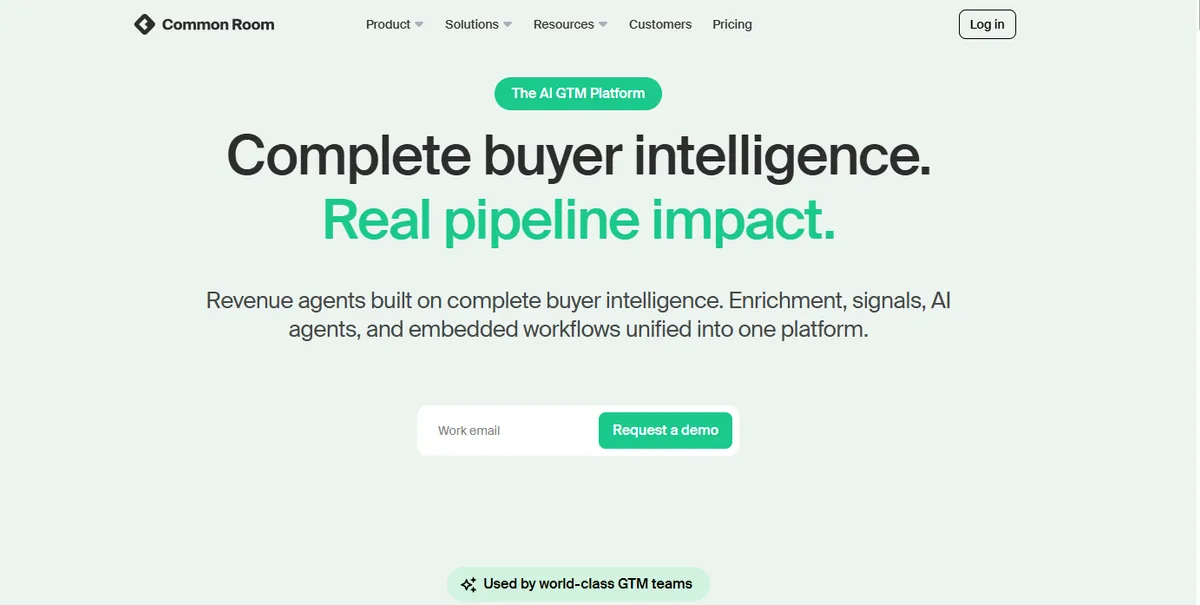
Best for: Signal-based GTM and community or product signals.
Common Room is useful when I want to understand signals coming from multiple customer and prospect interactions.
The broader category is signal intelligence.
I want to know:
- who is engaging
- where they are engaging
- what they are doing
- whether multiple signals are connected
- whether an account is becoming active
This becomes:
SIGNALS
|
+-- Website
+-- Product
+-- Community
+-- Social
+-- Content
+-- GitHub
+-- Events


Then:

Signals
 ↓
Identity
 ↓
Account
 ↓
Score
 ↓
Action
This fits naturally with my Signal-Based Selling framework.
7. Hightouch
Best for: Data activation from warehouses into GTM systems.
Hightouch becomes useful when my company already has a strong data warehouse.
For example:
Product Data
     ↓
Snowflake
     ↓
Hightouch
     ↓
CRM
     ↓
Sales
This is particularly valuable for product-led companies.
Suppose my warehouse knows:
Account:
Acme

Users:
32

Weekly Active Users:
28

Usage:
+140%

Enterprise Feature:
Activated
I can activate that information into Salesforce or another GTM system.
The GTM Engineer can then create a workflow:
Usage Spike
 ↓
Account Signal
 ↓
Expansion Score
 ↓
CS / Sales Routing
That turns product data into revenue action.
8. Gumloop
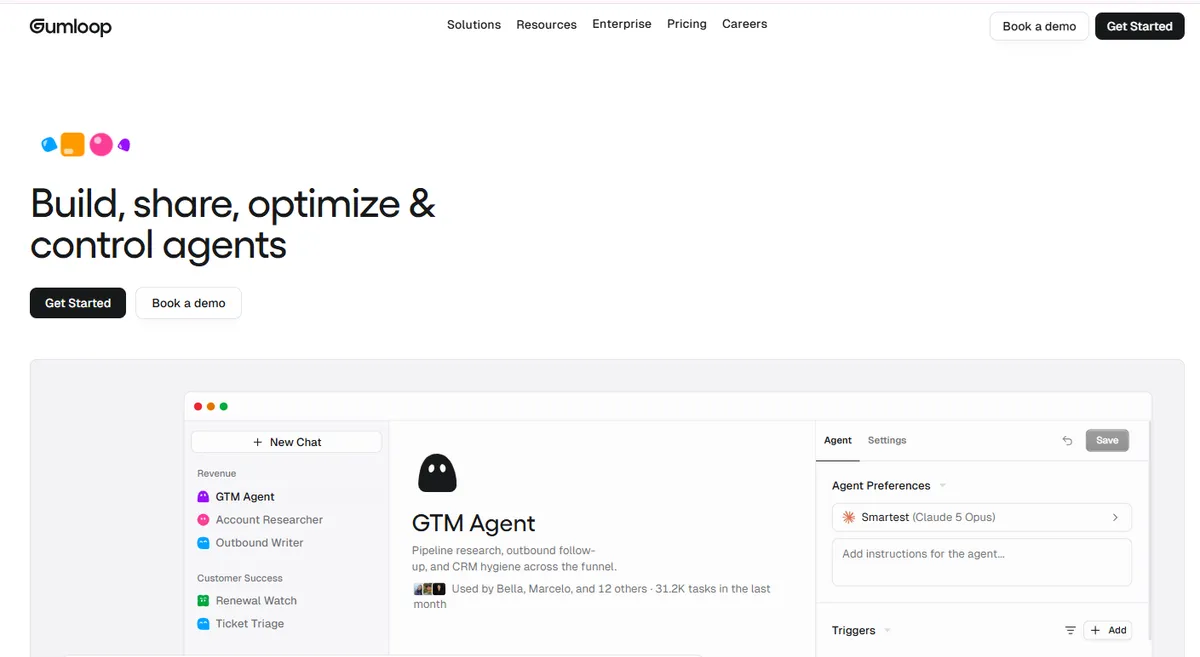
Best for: AI-driven workflow automation and agentic GTM processes.
Gumloop is useful when I want AI agents and workflows to operate across GTM tools.
A workflow might look like:
New Account
 ↓
Research
 ↓
Find Website Information
 ↓
Analyze Company
 ↓
Score ICP
 ↓
Generate Summary
 ↓
Update CRM
The important capability here is not simply AI-generated text.
It is AI connected to workflow execution.
That distinction matters.
I want the agent to do something useful with its research.
9. Salesloft
Best for: Sales engagement and sequence execution.
These platforms are important when the GTM workflow has reached the execution layer.
I do not consider them the core growth engineering platform.
Instead:
GTM Intelligence
↓
Qualification
↓
Prioritization
↓
Sales Engagement
↓
Outreach / Salesloft
The GTM Engineer can control who enters a sequence, when they enter, which sequence they receive, and when they should be removed.
That is much more valuable than simply automating email sends.
10. Gong
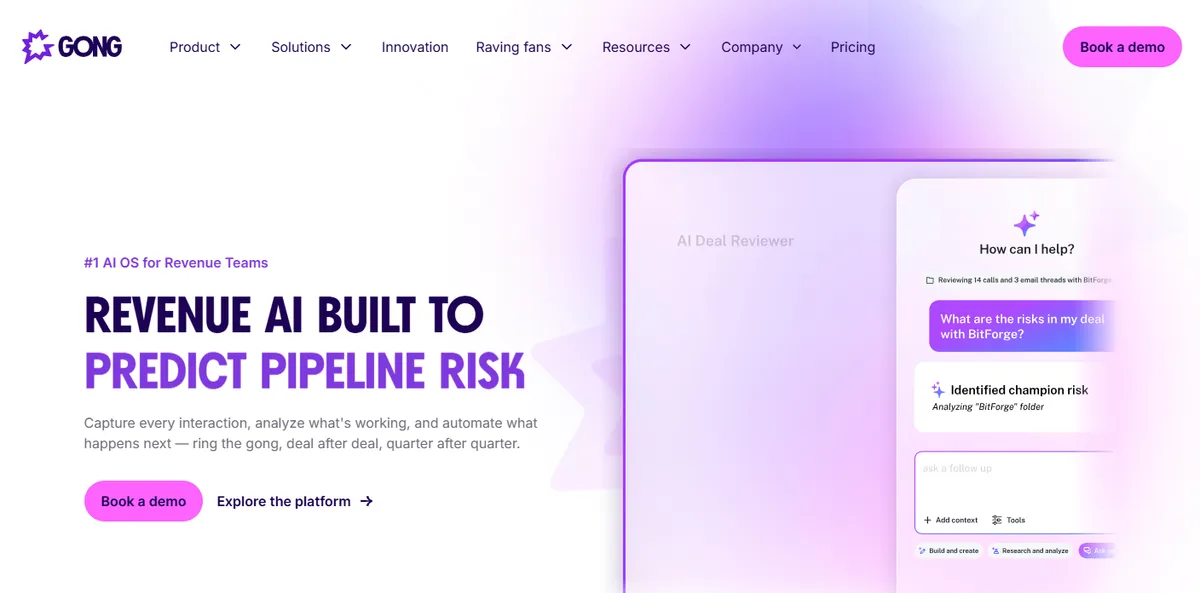
Best for: Conversation intelligence and feedback loops.
Gong sits further down the revenue lifecycle.
It can provide information from sales conversations that I can use to improve GTM systems.
For example:
Sales Calls
    ↓
Conversation Data
    ↓
Common Objections
    ↓
Analysis
    ↓
Messaging Update
    ↓
GTM Experiment
That creates a feedback loop between execution and strategy.
I can use conversation intelligence to identify:
- repeated objections
- competitor mentions
- pricing concerns
- product gaps
- buying signals
- successful messaging
Then feed those insights back into the GTM system.
How I choose the right growth engineering software?
I start with the problem.
If my problem Is bad data
I start with:
Clay
+
Apollo
+
Enrichment APIs
If my problem Is workflow automation
I start with:
n8n
+
CRM
+
APIs
If my problem Is signals
I look at:
Common Room
+
First-Party Data
+
Product Data
If my problem Is product-led growth
I look at:
Warehouse
+
Hightouch
+
CRM
+
Product Analytics
If my problem Is AI automation
I look at:
AI Agent
+
Gumloop / Clay / n8n
+
CRM
+
Enrichment
If my problem Is sales execution
I look at:
Apollo
+
Outreach
+
Salesloft
The tool should follow the bottleneck.
The growth engineering architecture I prefer
I prefer a layered system.
DATA
                      ↓
             Enrichment Layer
                      ↓
             Intelligence Layer
                      ↓
                GTM Logic
                      ↓
            Orchestration Layer
                      ↓
              Execution Layer
                      ↓
             Measurement Layer
                      ↓
                Feedback
                      ↓
                   DATA
A practical implementation might look like:
Salesforce
     +
Snowflake
     ↓
Clay / Enrichment
     ↓
Common Room / Signals
     ↓
n8n / Workflow Logic
     ↓
AI Agent
     ↓
Apollo / Outreach
     ↓
Salesforce
     ↓
Gong
     ↓
Analytics
This is a system.
It is not simply a list of SaaS subscriptions.
Growth engineering software and ICP
Software becomes more powerful when I connect it to my ICP.
Suppose my ICP is:
100-2,000 employees
+
B2B SaaS
+
North America
+
Salesforce


The system can automatically evaluate accounts:

Account
 ↓
Enrichment
 ↓
ICP
 ↓
Negative ICP
 ↓
Signal
 ↓
Score
That connects naturally with my Ideal Customer Profile and Negative ICP frameworks.
The important point is that software should enforce the GTM strategy, not simply store it.
Growth engineering software and signal-based GTM
I also want software to respond to changes.
For example:
New VP Sales
+
30 New Sales Hires
+
Funding Event
+
New CRM


The system can interpret these events as a combined account signal.

Then:

Signal
 ↓
Account Score
 ↓
Research
 ↓
Personalization
 ↓
Sales Action
This is where How to Build Signal-Based Systems becomes part of the same semantic cluster.
The software stack should help me detect the signal and execute the appropriate GTM response.
Growth engineering software and AI agents
AI agents change how I think about the stack.
Previously:
Human
 ↓
Tool
 ↓
Human
 ↓
Tool
 ↓
Human


Now I can build:

TRIGGER
 ↓
AI AGENT
 ↓
RESEARCH
 ↓
ENRICHMENT
 ↓
DECISION
 ↓
WORKFLOW
 ↓
CRM


For example:

New Target Account
        ↓
AI Research
        ↓
Company Enrichment
        ↓
ICP Evaluation
        ↓
Negative ICP Check
        ↓
Buying Signal Detection
        ↓
Personalization
        ↓
Sales Sequence
This is one reason the AI GTM Engineer is becoming an important part of modern revenue infrastructure.
Build the GTM System, Not Just the Tool Stack
If I have ten GTM tools but still depend on spreadsheets, manual research, and repeated CRM updates, I do not really have an engineered GTM system.
I have a collection of software.
The goal is to connect the tools around a defined workflow:
data → intelligence → decision → action → measurement.
That is where Anfloy's GTM Engineering approach can help turn disconnected GTM tools into an operating system.
How I build a growth engineering stack At Anfloy?
My process is:
Step 1: Identify the Bottleneck
For example:
SDRs spend four hours a day researching accounts.
Step 2: Identify the Data
I determine what information is required.
Company
+
Technology
+
Hiring
+
Decision-Maker
Step 3: Identify the Decision
What should the system decide?
Is this account worth researching?
Step 4: Identify the Action
For example:
Create personalized outbound task.
Step 5: Select the Tools
Only now do I select:
- enrichment
- workflow
- AI
- CRM
- engagement
Step 6: Build a Small Version
I test on 50 or 100 accounts.
Step 7: Measure
I track:
- time saved
- match rate
- qualification accuracy
- meetings
- conversion
- pipeline
Step 8: Scale
Only after the workflow works do I expand it.
My growth engineering software framework
I reduce the entire stack to:
DATA
 ↓
ENRICH
 ↓
UNDERSTAND
 ↓
QUALIFY
 ↓
SIGNAL
 ↓
DECIDE
 ↓
ACT
 ↓
MEASURE
 ↓
LEARN
Each software category should support one or more stages.
The goal is not to build the largest GTM stack.
The goal is to build the smallest reliable system that can repeatedly produce the desired GTM outcome.
Conclusion
I do not think the best growth engineering software is the software with the most features.
I think it is the software that helps me turn a revenue problem into a repeatable system.
For enrichment and orchestration, I would look closely at Clay.
For prospecting and outbound, Apollo is a strong option.
For workflow automation, n8n gives technical teams significant flexibility.
For CRM-centered growth, HubSpot and Salesforce remain important foundations.
For signal intelligence, Common Room can become an important layer.
For warehouse-driven activation, Hightouch becomes particularly useful.
For AI-driven workflows, tools such as Gumloop can help connect agents to execution.
For sales engagement, Outreach and Salesloft provide the execution layer.
For conversation intelligence, Gong creates a feedback loop from sales conversations back into GTM strategy.
But I would not build the stack by buying every tool.
I would build it around the workflow:
BUSINESS PROBLEM
      ↓
DATA
      ↓
INTELLIGENCE
      ↓
GTM LOGIC
      ↓
AUTOMATION
      ↓
EXECUTION
      ↓
MEASUREMENT
      ↓
LEARNING
That is the real role of growth engineering software.
It gives the GTM Engineer the building blocks required to turn manual growth activities into repeatable, measurable, and increasingly autonomous revenue systems.
Turn Your GTM Stack Into a Revenue System
If your GTM team already has the tools but still relies heavily on manual research, spreadsheets, repetitive CRM work, and disconnected workflows, the next step is not necessarily another software subscription.
It is engineering the system between the tools.
Anfloy helps companies build GTM Engineering systems that connect data, enrichment, signals, AI, CRM, routing, outbound, and automation into a unified revenue workflow.
Frequently asked questions
What is growth engineering software for GTM?
Growth engineering software is the collection of tools GTM Engineers use to build, automate, and optimize revenue workflows. It can include enrichment, CRM, workflow automation, signals, AI agents, sales engagement, data activation, and analytics.
What is the best growth engineering software for GTM?
There is no single best platform. I would generally look at Clay for GTM orchestration, Apollo for prospecting and outbound, n8n for technical workflow automation, HubSpot or Salesforce for CRM infrastructure, and Common Room for signal intelligence. The right choice depends on the bottleneck I am solving.
What is the difference between GTM software and growth engineering software?
Traditional GTM software usually helps a team perform a particular function, such as CRM, email sequencing, or marketing automation. Growth engineering software is evaluated more heavily on its ability to connect systems and create repeatable, automated revenue workflows. The difference is not always the software itself. It is how the software is used.
Do I need all of these tools to build a GTM engineering stack?
No. I would start with the smallest stack that can solve the current bottleneck. For example: CRM + Enrichment + Automation may be enough for an early-stage company. I only add signals, warehouses, AI agents, engagement platforms, or specialized tools when they solve a specific problem.
Let's build
what your
company needs.
Drop your email. We'll send The Custom Agent Blueprint on what we'd build first for a company like yours, before you ever take a meeting.