
Signal-Based Prospecting: Modern Way to Find Buyers Before Your Competitors
Learn how signal-based prospecting works, which buying signals matter most, and how AI-powered GTM teams use signals to generate more pipeline.
On this page
- What Is Signal-Based Prospecting?
- What Is a Buying Signal?
- The Most Valuable Prospecting Signals
- Signal-Based Prospecting vs Traditional Prospecting
- Why Timing Matters More Than Personalization?
- How Is AI Transforming Signal-Based Prospecting?
- How Does Signal-Based Prospecting Work in Practice?
- Common Mistakes in Signal-Based Prospecting
- Signal-Based Prospecting for Different Industries
- Why Is Signal-Based Prospecting Replacing Cold Prospecting?
- How Anfloy Builds Signal-Based Prospecting Systems?
- Conclusion
Most outbound prospecting fails for one simple reason.
The timing is wrong.
A company may perfectly match your ideal customer profile.
The decision-maker may have the right title.
The business may have the budget.
But if they are not actively evaluating solutions, your outreach often gets ignored.
This is why traditional prospecting has become increasingly difficult.
Most teams build lists based on:
- industry
- company size
- location
- job titles
While useful, these filters only tell you who to contact.
They do not tell you when to contact them.
That is where signal-based prospecting changes everything.
Instead of reaching out randomly, signal-based prospecting helps identify companies that are actively experiencing change.
And change often creates buying opportunities.
Modern GTM teams use signals to determine:
- which accounts deserve attention
- when outreach should happen
- how messaging should be personalized
- where buying intent exists
This is one reason signal-based prospecting is becoming a core component of modern AI-powered revenue engines.
What Is Signal-Based Prospecting?
Signal-based prospecting is a sales strategy that uses real-world events and behavioral indicators to identify potential buyers.
Instead of targeting accounts solely based on static criteria, teams prioritize companies showing signs of change or buying intent.
These signals help answer a critical question:
Why should this prospect care right now?
Rather than sending generic outbound messages, sales teams can engage prospects when they are most likely to need a solution.
The result is:
- better timing
- higher response rates
- stronger personalization
- more qualified pipeline
Why Traditional Prospecting Is Becoming Less Effective?
For years, prospecting was largely based on account lists.
The process looked something like this:
- Build a target account list.
- Find contacts.
- Send outreach.
- Hope for a response.
The challenge is that most companies receive dozens of outbound messages every week.
Buyers have become increasingly selective.
Simply matching an ICP is no longer enough.
Revenue teams need context.
They need reasons.
They need signals.
This is why signal-based prospecting is replacing volume-based prospecting in many high-performing GTM organizations.
What Is a Buying Signal?
A buying signal is an event, action, or behavioral change that indicates a company may be moving closer to a purchase decision.
Not all signals are equal.
Some suggest curiosity.
Others suggest urgency.
The goal is identifying signals that correlate with actual buying behavior.
The Most Valuable Prospecting Signals
Funding Announcements
Companies that recently raised capital often invest in:
- software
- growth initiatives
- operations
- hiring
Funding events frequently create new buying opportunities.
Hiring Activity
When organizations begin hiring for:
- sales
- marketing
- RevOps
- operations
it often signals growth initiatives.
Growth creates operational challenges.
Operational challenges create demand for solutions.
Leadership Changes
New executives often bring:
- new priorities
- new budgets
- new technology decisions
This can create opportunities for vendors.
Technology Adoption
When a company adopts new technology, it may indicate:
- digital transformation
- operational expansion
- process improvement initiatives
These events often create additional software needs.
Website Engagement
Visitors repeatedly viewing:
- pricing pages
- product pages
- comparison pages
- implementation guides
may indicate active buying intent.
Content Consumption
Prospects consuming educational content often signal interest in solving a particular problem.
The context behind the content matters.
Product Usage Signals
For product-led companies, usage behavior often reveals buying readiness before a sales conversation occurs.
Signal-Based Prospecting vs Traditional Prospecting
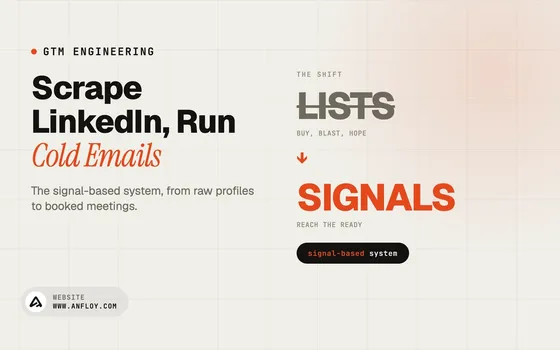
| Traditional Prospecting | Signal-Based Prospecting |
|---|---|
| Static account lists | Dynamic opportunities |
| Generic outreach | Context-driven outreach |
| ICP-only targeting | ICP + buying signals |
| Low relevance | High relevance |
| Volume focused | Timing focused |
| Reactive | Proactive |
The biggest difference is timing.
Signal-based prospecting focuses on reaching buyers when change is happening.
Why Timing Matters More Than Personalization?
Many sales teams obsess over personalization.
Personalization is important.
Timing is often more important.
A highly personalized email sent at the wrong time may still be ignored.
A relevant message sent immediately after a funding announcement may generate a response even with minimal personalization.
The strongest outbound programs combine:
- timing
- relevance
- personalization
together.
Signals provide the timing layer.
How Is AI Transforming Signal-Based Prospecting?
Tracking signals manually is difficult.
Thousands of companies generate signals every day.
Human teams cannot realistically monitor them all.
This is where AI Prospecting creates a major advantage.
Modern AI systems powered by AI agents can:
- monitor signals continuously
- identify ICP matches
- enrich account data
- perform AI-powered lead qualification
- prioritize prospects
- trigger workflows automatically
The result is a prospecting process that scales far beyond manual effort.
How Does Signal-Based Prospecting Work in Practice?
A modern workflow often looks like this:
Step 1
Define your ICP as part of a broader GTM AI stack
Identify:
- industries
- company sizes
- business models
- buyer roles
that represent ideal customers.
Step 2
Monitor buying signals.
Track events such as:
- funding
- hiring
- technology changes
- leadership movements
- engagement activity
Step 3
Enrich account data.
Gather:
- company information
- decision-maker details
- organizational context
Step 4
Qualify opportunities.
Determine:
- ICP fit
- urgency
- potential value
- likelihood to convert
Step 5
Launch personalized outreach.
Reference the signal directly within the messaging.
This creates relevance.
Common Mistakes in Signal-Based Prospecting
Tracking Too Many Signals
Not every signal predicts buying behavior.
Focus on the signals that matter most.
Ignoring ICP Fit
A signal alone does not make someone a good prospect.
Signals should be layered on top of ICP criteria.
Waiting Too Long
Signals lose value over time.
The sooner outreach happens, the stronger the opportunity.
Over-Automating Personalization
Signals should enhance relevance.
Not replace authentic communication.
Treating Signals as Guarantees
Signals increase probability.
They do not guarantee purchases.
Signal-Based Prospecting for Different Industries
SaaS Companies
Identify accounts entering growth stages.
Agencies
Find businesses investing in marketing, sales, or operations.
Recruiting Firms
Target companies actively hiring.
Consulting Firms
Identify organizations undergoing change.
Professional Services
Reach companies facing operational challenges.
Why Is Signal-Based Prospecting Replacing Cold Prospecting?
Traditional cold prospecting assumes every prospect deserves equal attention.
Signal-based prospecting recognizes that some prospects are simply more likely to buy right now.
Instead of increasing outbound volume, teams increase outbound relevance.
This often results in:
- higher reply rates
- more meetings
- better pipeline quality
- improved efficiency
The goal is not contacting more companies.
The goal is contacting the right companies at the right time.
How Anfloy Builds Signal-Based Prospecting Systems?
Most companies understand the value of signals.
The challenge is operationalizing them at scale, which is often where companies begin their AI automation journey.
At Anfloy, signal-based prospecting is built into larger GTM engines rather than treated as a standalone workflow.
The process starts by identifying:
- your ICP
- qualification criteria
- revenue goals
- buying signals
- operational workflows
From there, custom AI agents continuously monitor relevant signals across the market.
Signal Detection
Signal Detection Through Multi-Agent AI Architecture
Agents track:
- funding announcements
- hiring activity
- leadership changes
- technology adoption
- website behavior
- intent signals
to identify potential opportunities automatically.
Enrichment & Qualification
The system then:
- enriches account data
- finds decision-makers
- evaluates ICP fit
- prioritizes opportunities
before sales teams get involved.
Personalized Execution
AI agents can generate context-aware outreach using the signal as the foundation for messaging.
CRM & Revenue Operations
The AI for RevOps system can automatically:
- Update CRM records
- assign leads
- trigger workflows
- create tasks
- coordinate follow-ups
Create a complete signal-to-pipeline workflow.
Most importantly, the infrastructure belongs to the client.
You own:
- the code
- the workflows
- the data flows
- the operational logic
The result is a company-owned prospecting engine rather than another software subscription, similar to the philosophy behind replacing SaaS tools with custom AI
Conclusion
The future of outbound sales is not about sending more messages.
It is about sending the right message at the right time.
Signal-based prospecting helps revenue teams move beyond static account lists and focus on opportunities that are actually worth pursuing.
By combining:
- ICP targeting
- signal intelligence
- enrichment
- qualification
- personalization
- workflow automation
businesses can build a more predictable and efficient pipeline generation process.
At Anfloy, signal-based prospecting forms the foundation of larger GTM systems that connect:
- buying signals
- AI agents
- CRM workflows
- qualification engines
- revenue operations
into a single operational framework.
Because in modern sales, timing is often the difference between being ignored and starting a conversation.
Frequently Asked Questions
What are examples of buying signals?
Common examples include funding announcements, hiring activity, leadership changes, technology adoption, website engagement, and content consumption.
Why is signal-based prospecting effective?
It improves timing and relevance by targeting prospects when they are most likely to need a solution.
Can AI automate signal-based prospecting?
Yes. AI systems can monitor signals, enrich accounts, qualify opportunities, and trigger outreach automatically.
What is the difference between signal-based prospecting and traditional prospecting?
Traditional prospecting focuses on static account lists. Signal-based prospecting focuses on dynamic opportunities created by business events and buyer behavior.
Let's build
what your
company needs.
Drop your email. We'll send The Custom Agent Blueprint on what we'd build first for a company like yours, before you ever take a meeting.