
5 AI Chatbots for Small Business: Benefits, Use Cases & Guide
Learn how AI chatbots help small businesses automate customer support, lead qualification, sales conversations, and business operations.
On this page
- What are AI chatbots?
- Why are small businesses adopting AI chatbots?
- How do AI chatbots work?
- What are the benefits of AI chatbots for small businesses?
- What are the top AI chatbot solutions?
- What are the popular AI chatbot use cases?
- What is the difference between AI Chatbots vs traditional chatbots?
- When do basic chatbots stop being enough?
- How to choose the right AI chatbot?
- Why companies choose Anfloy instead of generic chatbot platforms?
- What are the common mistakes small businesses make?
- Conclusion
Small businesses are under constant pressure to do more with less.
Unlike large enterprises, they often operate with:
- smaller teams
- tighter budgets
- limited operational capacity
- growing customer expectations
Customers now expect instant responses.
They want answers outside business hours.
They expect personalized support across multiple channels.
Meeting these expectations can be difficult without increasing headcount.
This is one reason AI chatbots have become increasingly popular among small businesses.
Modern AI chatbots can:
- answer customer questions
- qualify leads
- book appointments
- support sales conversations
- provide customer support
- and automate repetitive interactions
The result is faster response times, better customer experiences, and improved operational efficiency.
However, not all chatbots are the same.
Many businesses still think of chatbots as simple FAQ tools.
Today's AI-powered systems are significantly more capable.
This guide explains how AI chatbots work, where they create value, and how small business chatbots can use them to improve growth and operations.
What are AI chatbots?
AI chatbots are software applications that use artificial intelligence to interact with customers through natural conversations.
Unlike traditional chatbots that rely on predefined rules, AI chatbots can:
- understand intent
- interpret questions
- retrieve information
- generate responses
- maintain context
- and perform actions
This allows them to handle more complex interactions.
Examples include:
- customer support
- lead qualification
- appointment scheduling
- product recommendations
- onboarding assistance
- and sales conversations
Modern AI chatbots act more like virtual assistants than scripted bots.
Why are small businesses adopting AI chatbots?
Small businesses often face a common challenge.
Customer expectations continue increasing while operational resources remain limited.
As a result, business owners frequently spend time answering repetitive questions such as:
- What are your prices?
- Are you available today?
- How does your service work?
- Can I schedule a consultation?
- Do you serve my location?
These interactions are important but time-consuming.
AI chatbots for small business help automate these conversations while maintaining responsiveness.
Benefits include:
- 24/7 availability
- Reduced support workload
- Faster response times
- Improved customer satisfaction
- Increased lead capture
- operational efficiency
This allows small businesses to scale customer interactions without scaling support teams.
How do AI chatbots work?
Modern AI chatbots operate through several layers.
Understanding user intent
The AI-powered chatbots for small businesses analyzes customer messages and identifies what the user wants.
Examples include:
- asking a question
- requesting a quote
- booking an appointment
- seeking support
This helps determine the appropriate response.
Knowledge retrieval
The chatbot retrieves information from:
- FAQs
- websites
- documentation
- databases
- internal systems
This ensures answers remain accurate and relevant.
Response generation
AI models generate natural responses based on context and available information.
This creates more human-like conversations.
Action execution
Advanced chatbots can perform actions such as:
- scheduling meetings
- collecting lead information
- updating CRM records
- sending notifications
- triggering workflows
This is where AI chatbots for small business begin to overlap with broader automation systems and AI agents that can execute tasks across multiple business tools.
Learn more about custom AI agent development and how businesses deploy these systems in production.
Need More Than a Basic AI Chatbot?
Most chatbot platforms stop at answering questions.
Modern businesses need AI systems that can:
qualify leads
book meetings
access company knowledge
update CRM records
trigger workflows
support customer conversations
If you're looking for an AI chatbot that actually drives business outcomes, explore Anfloy's custom AI chatbot solutions:
👉 AI Chatbot Services
What are the benefits of AI chatbots for small businesses?
24/7 customer support
Customers can receive assistance at any time.
This is particularly valuable for businesses serving multiple time zones.
Better lead generation
Businesses increasingly use AI-powered lead qualification systems to identify high-intent prospects before routing them to sales teams.
This helps capture leads that might otherwise leave the site.
Faster response times
Customers receive immediate answers rather than waiting for human support.
Reduced operational costs
Many repetitive interactions can be handled automatically.
This reduces administrative workload.
Improved customer experience
Faster, more consistent support often improves customer satisfaction.
What are the top AI chatbot solutions?
There are dozens of AI chatbot platforms available today, each designed for different business needs. The right choice depends on your goals, integrations, and level of customization required.
Tidio (Lyro)
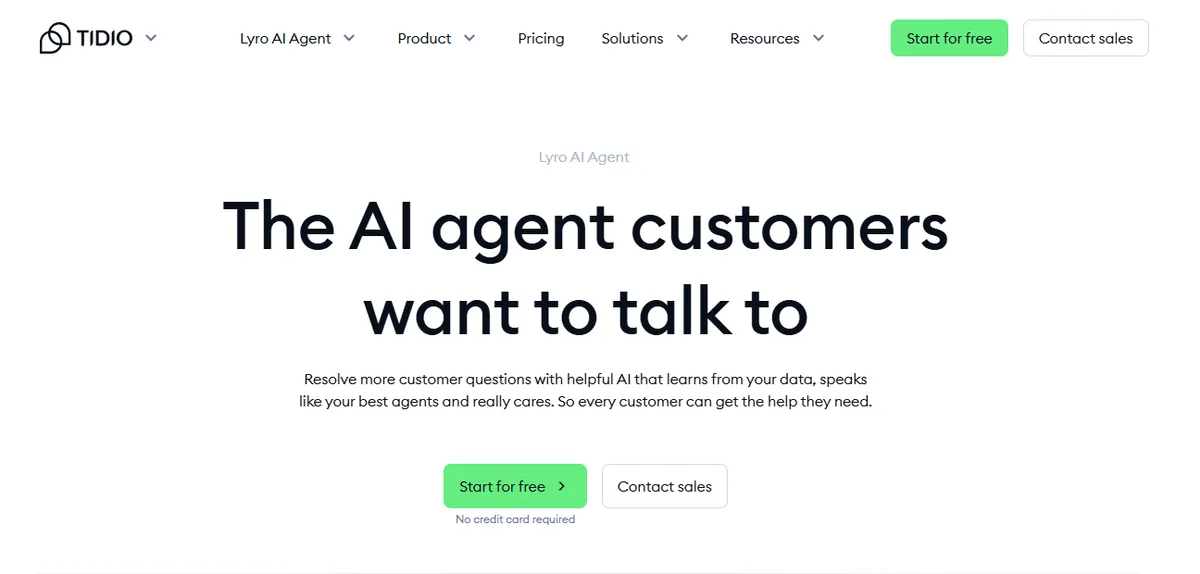
Best for e-commerce businesses and beginners.
Tidio's Lyro AI chatbot is known for its user-friendly interface and strong e-commerce integrations. It works particularly well for online stores using Shopify and combines AI-powered conversations with live chat functionality.
Key strengths:
- Easy setup
- Shopify integration
- Live chat + AI support
- Beginner-friendly interface
Heyy
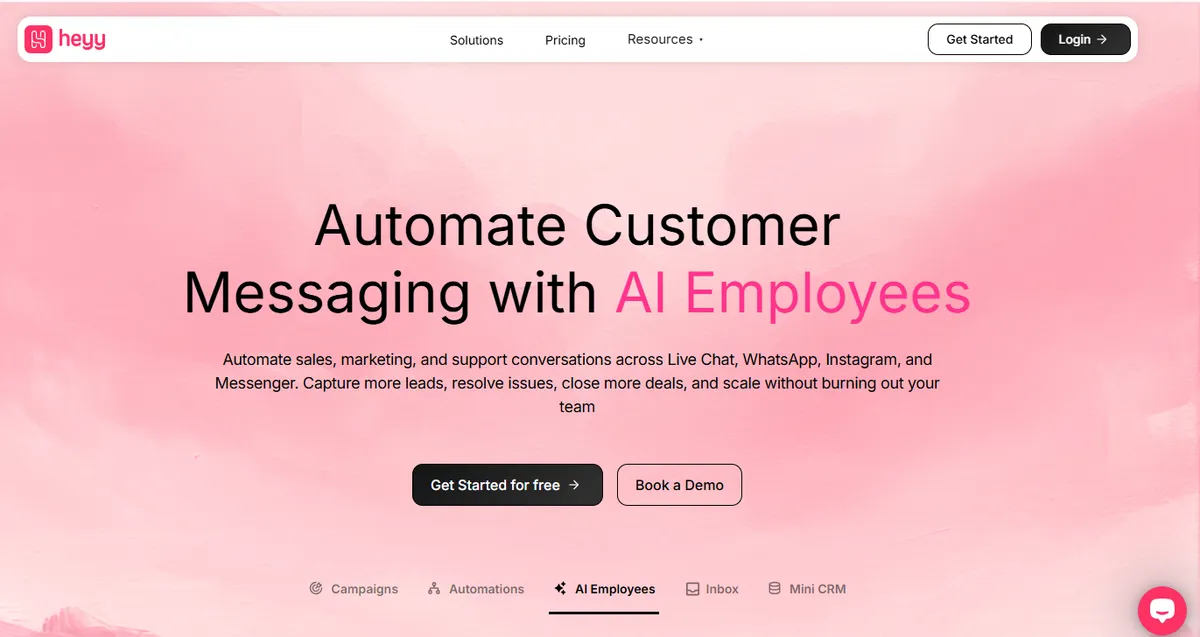
Best for businesses managing conversations across multiple channels and one of the best custom chatbot software for small business.
Heyy centralizes customer conversations from:
- Facebook Messenger
- Website chat
This helps businesses maintain conversation history and customer context across channels without switching between multiple platforms.
Key strengths:
- Multi-channel messaging
- Unified inbox
- Customer context tracking
- Simplified communication management
Intercom (Fin)
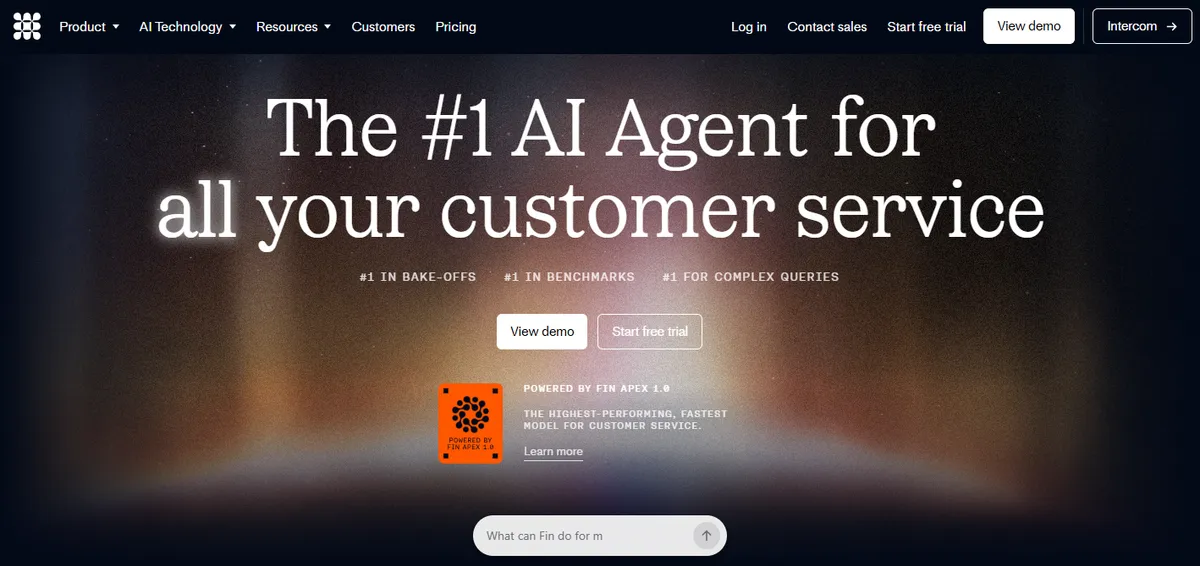
Best for customer support teams, service operations and affordable chatbot for small businesses.
Intercom Fin uses AI to answer customer questions using information from your existing help center and knowledge base.
It is particularly popular among SaaS companies with growing support teams.
Key strengths:
- Knowledge base integration
- Automated support
- Help desk capabilities
- Enterprise-grade customer service
Chatbase
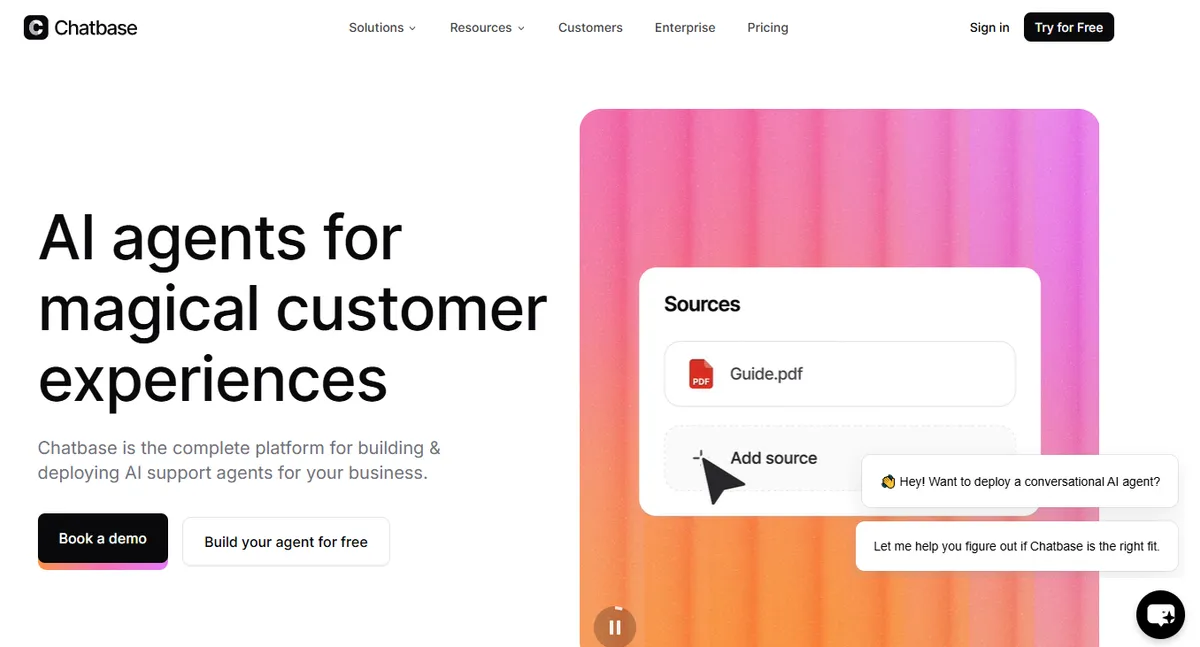
Best for creating branded FAQ chatbots quickly.
Chatbase allows businesses to build AI chatbot for small businesses by uploading documents, knowledge bases, PDFs, or website content.
It is a simple solution for organizations that want a chatbot trained on their own information.
Key strengths:
- Fast deployment
- Custom knowledge training
- Website integration
- No-code setup
Landbot
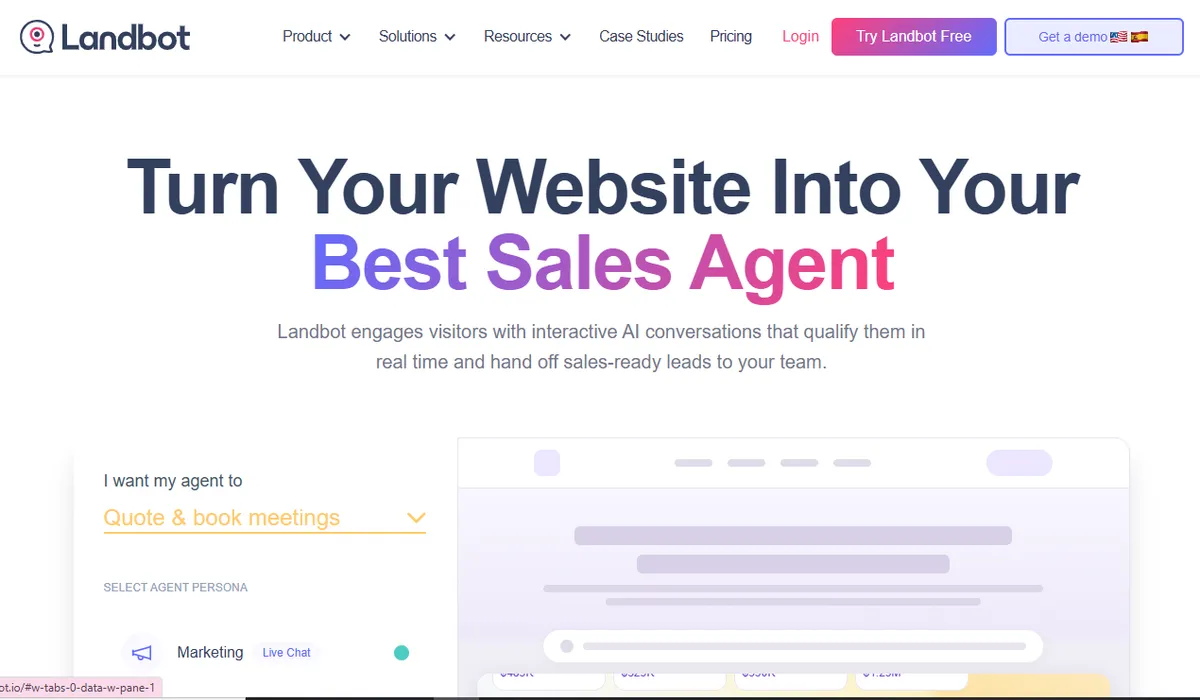
Best for marketing, lead generation, and interactive experiences.
Landbot focuses on conversational experiences rather than traditional support chat.
Chatbot for business organization commonly use it to create:
- lead capture funnels
- assessment tools
- personality quizzes
- qualification workflows
Key strengths:
- Visual builder
- Lead generation workflows
- Interactive experiences
- Marketing-focused automation
When off-the-shelf chatbots stop being enough?
Platforms like Tidio, Heyy, Intercom, Chatbase, and Landbot are excellent starting points for many small businesses.
However, growing companies often reach a point where they need more than a chatbot.
They need systems that can:
- access CRM data
- qualify leads automatically
- retrieve company knowledge
- trigger operational workflows
- coordinate sales processes through AI-powered sales pipeline automation
- and execute actions across multiple platforms
This is where businesses begin moving from standalone chatbot tools toward custom AI infrastructure and agentic systems built around their unique workflows.
What are the popular AI chatbot use cases?
Different businesses use AI chatbots in different ways.
Lead qualification
The chatbot can ask qualifying questions such as:
- company size
- budget
- service requirements
- project timeline
This helps prioritize opportunities.
Appointment booking
Chatbots can:
- check availability
- schedule meetings
- send reminders
- collect information
without human involvement.
Customer support
Common support questions can be answered automatically.
Examples include:
- pricing
- product information
- service details
- account assistance
E-commerce assistance
Online stores use AI chatbots for:
- product recommendations
- order tracking
- customer support
- cart recovery
Service business automation
Professional service providers can automate:
- consultations
- inquiries
- onboarding
- and follow-up communication
What is the difference between AI Chatbots vs traditional chatbots?
| Traditional Chatbots | AI Chatbots |
|---|---|
| Rule-based | AI-powered |
| Scripted responses | Dynamic responses |
| Limited flexibility | Context-aware conversations |
| FAQ-focused | Multi-purpose assistance |
| Static workflows | Adaptive interactions |
| Static workflows | Personalized conversations |
This is why many businesses are replacing older chatbot systems with AI-powered alternatives.
When do basic chatbots stop being enough?
Many small businesses start with simple chatbot platforms.
These work well for basic tasks.
However, limitations often appear as businesses grow.
Common challenges include:
- limited customization
- poor personalization
- inability to access company data
- weak integrations
- rigid workflows
At this stage, businesses often need more than a chatbot.
They need an AI-powered business system.
AI chatbots vs AI agents
Many people use these terms interchangeably.
They are not the same.
AI chatbots
Designed primarily for conversations.
They answer questions and assist users.
AI agents
Designed for operational execution.
They can:
- retrieve information
- make decisions
- coordinate workflows
- trigger actions
- interact with business systems
Think of chatbots as the interface.
Think of AI agents as the infrastructure behind the interface.
This distinction becomes important as automation needs increase.
How to choose the right AI chatbot?
Before selecting a solution, businesses should evaluate:
Business goals
Are you trying to:
- generate leads
- reduce support volume
- improve customer experience
- automate operations
The goal should determine the technology.
Integration requirements
Consider whether the chatbot needs access to:
- CRM systems
- scheduling software
- internal databases
- support platforms
Scalability
Choose a solution that can grow alongside the business.
Ownership
Many chatbot platforms create dependency.
Businesses should evaluate how much control they retain over workflows and data.
Why companies choose Anfloy instead of generic chatbot platforms?
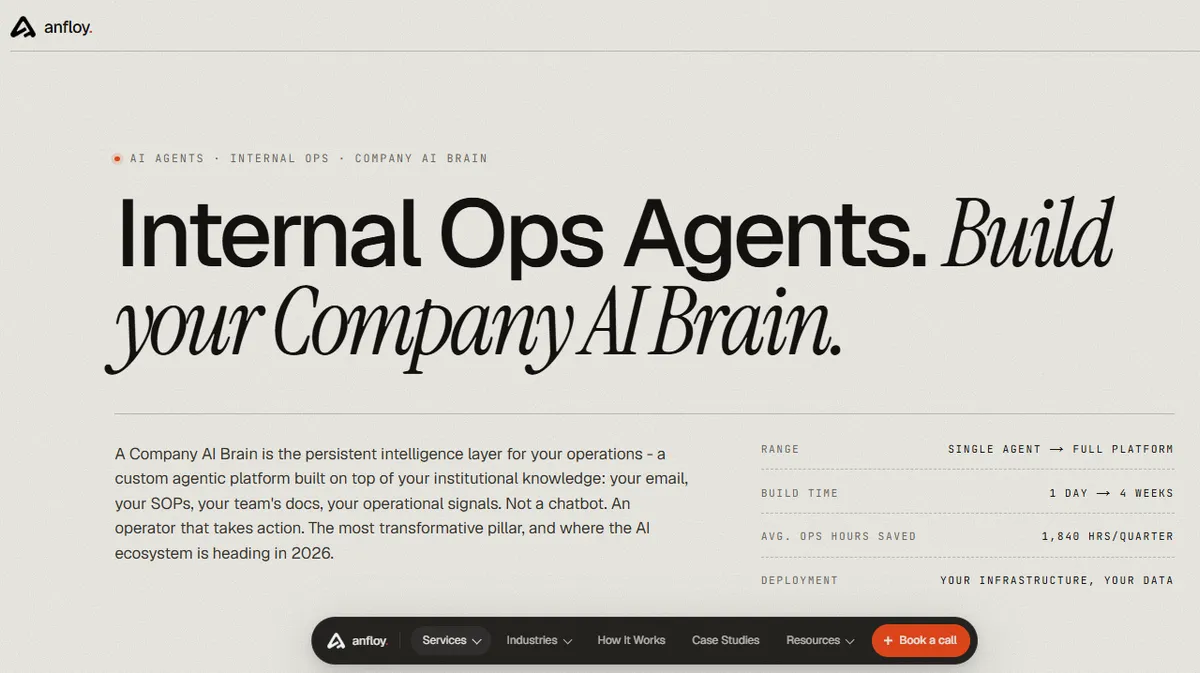
Most chatbot providers focus on conversation.
Anfloy focuses on business systems.
Instead of deploying standalone chatbots, Anfloy builds infrastructure that connects conversations directly to operations.
That includes:
AI Chatbots with Business Context
Chatbots connected to:
- CRM systems
- company knowledge
- operational workflows
- customer data
Company AI Brains
Company AI brains are knowledge systems that allow chatbots to access company-specific information, documentation, and operational knowledge.
GTM engines
Chatbots connected directly to:
- lead qualification
- enrichment
- CRM routing
- revenue operations
Internal operations systems
AI-powered workflows that extend beyond customer conversations.
Full-stack AI products
Custom platforms built entirely around business requirements.
Most importantly:
You own the system.
You own:
- workflows
- infrastructure
- integrations
- operational logic
No platform lock-in.
No software dependency.
No generic chatbot limitations.
This approach differs significantly from traditional software implementations and many AI agencies. Learn more about custom AI vs AI agencies.
Ready to Build an AI Chatbot That Actually Works?
Whether you need:
lead qualification
appointment booking
customer support
AI receptionist capabilities
CRM-connected conversations
or a fully custom AI assistant
Anfloy builds AI chatbots designed around your business workflows, not generic templates.
👉 Talk to an AI Infrastructure Expert
What are the common mistakes small businesses make?
Choosing the cheapest tool
Low-cost solutions often create limitations later.
Automating without a strategy
The chatbot should support business goals, not simply exist on the website.
Ignoring integration requirements
Disconnected chatbots provide limited value.
Expecting AI to replace human relationships
AI should support customer interactions, not eliminate personal connections.
Treating chatbots as a standalone tool
The greatest value comes when chatbots connect directly to business systems.
Conclusion
Small business AI chatbot are no longer just customer support tools.
They are becoming a critical part of how small businesses engage customers, capture leads, and automate operations.
The biggest advantage is not simply answering questions faster.
It is creating a scalable customer-interaction layer that operates around the clock.
As businesses grow, the conversation often shifts from basic chatbots to broader AI infrastructure.
That is where the greatest opportunities emerge.
At Anfloy, the focus is helping businesses move beyond generic chatbot platforms through:
- AI-powered chatbots
- GTM engines
- company AI brains
- internal operations systems
- and custom AI products
Because the future of customer interaction is not just conversational AI.
It is intelligent systems that connect conversations directly to business outcomes.
Looking beyond basic chatbots?
👉 See how Anfloy builds custom AI chatbot systems
👉 Schedule a call
Frequently Asked Questions
How much does an AI chatbot cost?
Costs vary depending on complexity, integrations, customization, and deployment requirements.
Can AI chatbots generate leads?
Yes. Many businesses use AI chatbots to qualify visitors, collect information, and route opportunities automatically.
What's the difference between AI chatbots and traditional chatbots?
AI chatbots use natural language processing and context-aware responses, while traditional chatbots rely on predefined rules and scripts.
How can a chatbot help your business?
A chatbot answers customer questions instantly, captures leads, books appointments, provides product information, automates support, and operates 24/7, improving customer satisfaction while reducing response times and operational costs.
What can you do with a business chatbot?
A business chatbot can qualify leads, answer FAQs, schedule meetings, collect customer information, process orders, send updates, provide support, and integrate with CRM systems to streamline business operations.
What are the best chatbots for small businesses?
The best chatbots for small businesses offer AI-powered conversations, CRM integration, lead qualification, appointment booking, and affordable pricing. Popular options include ChatGPT-powered bots, Intercom, Tidio, ManyChat, and Zoho SalesIQ.
What are low-cost chatbot solutions for small businesses?
Low-cost chatbot solutions include AI chatbots with monthly subscriptions, no-code builders, and cloud-based platforms that automate support, capture leads, answer FAQs, and integrate with websites without significant upfront investment.
How can small businesses use chatbots affordably?
Small businesses can use affordable chatbots by choosing subscription-based AI platforms, starting with essential automation, using no-code builders, integrating existing tools, and scaling features as customer demand and business growth increase.
What are the best AI customer service solutions for small and medium businesses?
The best AI customer service solutions for SMBs provide 24/7 support, automated responses, live chat, ticket management, CRM integration, and multilingual assistance. They improve customer experience while reducing support workload and costs.
Can AI chatbots connect to CRM systems?
Yes. Modern AI chatbots can integrate with CRM platforms, scheduling tools, knowledge bases, and operational workflows.
Let's build
what your
company needs.
Drop your email. We'll send The Custom Agent Blueprint on what we'd build first for a company like yours, before you ever take a meeting.