
9 Best Data Enrichment Tools for GTM Engineers in 2026
I compare the best data enrichment tools for GTM Engineers, including Clay, Apollo, ZoomInfo, Cognism, People Data Labs, and more.
On this page
- What is a data enrichment tool for GTM engineers?
- How I evaluate data enrichment tools?
- The best data enrichment tools for GTM engineers
- 2. Apollo
- 3. ZoomInfo
- 4. Cognism
- 5. People Data Labs
- 6. Clearbit / HubSpot data enrichment
- 7. FullEnrich
- 8. Lusha
- 9. Hunter
- How I choose between Clay and Apollo?
- How I choose between Clay and People Data Labs?
- How I build an enrichment stack?
- Data enrichment and ICP
- Data enrichment and Signal-based GTM
- Data enrichment and lead routing
- Data enrichment and AI agents
- How I evaluate enrichment data quality?
- Enrichment cost Is not the same as data value
- My recommended enrichment stack by GTM stage
- The data enrichment architecture I use
- Conclusion
When I build a GTM system, I quickly run into the same problem:
The CRM does not contain enough information to make good decisions.
I may know the company name and domain, but I still need to know:
- how large the company is
- what industry it operates in
- what technologies it uses
- who the decision-makers are
- whether the company fits my ICP
- whether it has a buying signal
- whether it should be excluded
- whether the data is still current
That is where data enrichment becomes part of GTM Engineering.
I do not look at enrichment tools simply as databases.
I look at them as data infrastructure that feeds GTM decisions.
The right enrichment tool can help me move from:
Raw Account
     ↓
Missing Data


to:

Raw Account
     ↓
Enrichment
     ↓
Validation
     ↓
ICP
     ↓
Signals
     ↓
Scoring
     ↓
Routing
     ↓
GTM Action
In this guide, I compare the data enrichment tools I would consider when building this type of system.
What is a data enrichment tool for GTM engineers?
I define a GTM data enrichment tool as software that helps me add missing or updated information to company, contact, account, or lead records so that my GTM systems can make better decisions.
The data can include:
- firmographics
- contact information
- job titles
- employee counts
- revenue
- industry
- funding
- company location
- technologies
- organizational structure
- employment history
- intent signals
- website activity
- other account intelligence
But for a GTM Engineer, the important question is not:
How much data does the tool have?
The better question is:
How easily can I turn that data into an executable GTM workflow?
That changes how I evaluate enrichment tools.
How I evaluate data enrichment tools?
I do not rank tools based only on database size.
I evaluate them across several dimensions.
1. Data coverage
Can the tool provide the fields I actually need?
For example:
Company
├── Employees
├── Revenue
├── Industry
├── Geography
├── Funding
└── Technology

Person
├── Name
├── Title
├── Seniority
├── Department
├── Email
└── Phone
2. Match quality
Can the system correctly identify the account or person?
This becomes especially important when I automate enrichment.
A wrong match can create a much bigger problem than a missing match.
Apollo, for example, exposes match_confidence for people enrichment, with high, medium, and low confidence outcomes.
3. API access
As a GTM Engineer, I want programmatic access.
I want to be able to trigger enrichment from:
- CRM events
- webhooks
- workflows
- internal applications
- data pipelines
- AI agents
- scheduled jobs
4. Waterfall enrichment
No single provider has perfect coverage.
I therefore value tools that allow me to query multiple providers.
Provider A
   ↓
No Match
   ↓
Provider B
   ↓
No Match
   ↓
Provider C
   ↓
Match
Clay currently positions itself around this model, offering access to 200+ enrichment tools and waterfalling across providers.
5. Workflow flexibility
I want more than a button that says "Enrich."
I want logic such as:

IF ICP = TRUE
THEN enrich technology

IF technology = Salesforce
THEN score +20

IF competitor = TRUE
THEN negative ICP = TRUE
6. CRM and data warehouse integration
The enrichment data needs somewhere useful to go.
I look for compatibility with:
- Salesforce
- HubSpot
- Snowflake
- data warehouses
- APIs
- webhooks
- workflow automation platforms
7. Cost control
I also look at:
- credits
- per-record pricing
- API costs
- provider costs
- failed-match charges
- volume discounts
- waterfall costs
8. Freshness
Enrichment data changes.
Employees change jobs.
Companies grow.
Technologies change.
Organizations get acquired.
I therefore care about refresh capabilities and data timestamps.
The best data enrichment tools for GTM engineers
My shortlist for 2026 includes:
- Clay
- Apollo
- ZoomInfo
- Cognism
- People Data Labs
- Clearbit / HubSpot Data Enrichment
- FullEnrich
- Lusha
- Hunter
I would not treat these tools as interchangeable.
They solve different parts of the GTM data problem.
1. Clay
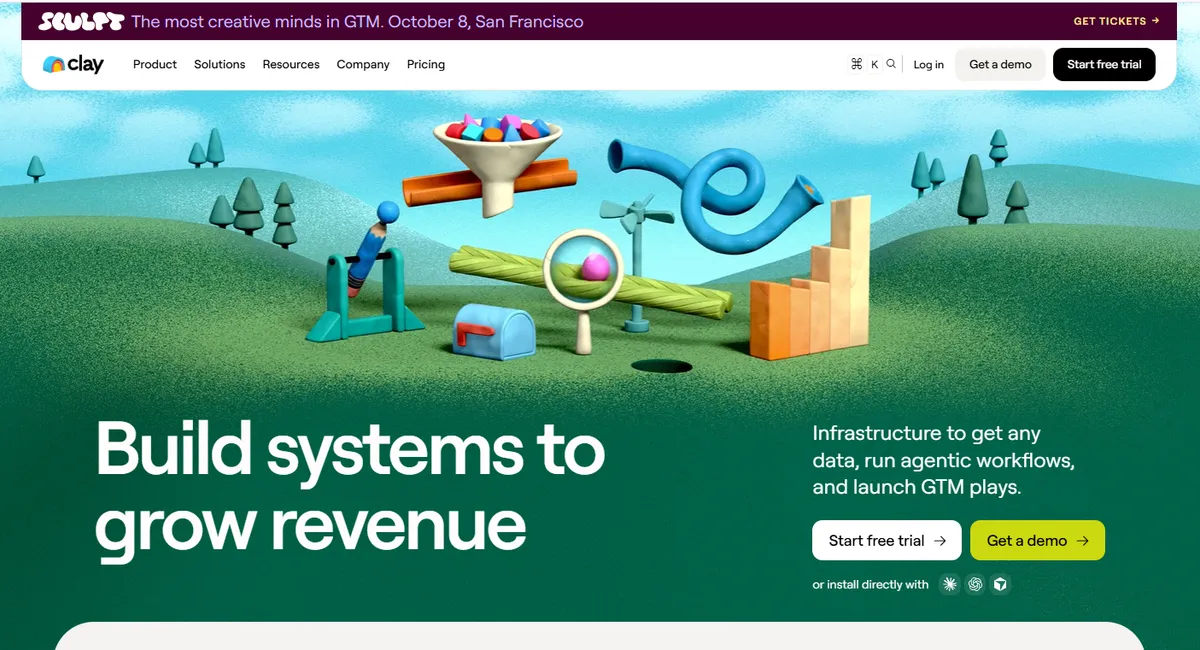
Best for: GTM Engineers who want flexible enrichment orchestration and waterfall workflows.
Clay is one of the tools I would look at first when I am building a complex enrichment system.
The reason is not simply its database.
It is the orchestration layer.
Clay currently says its platform provides access to 200+ data enrichment tools and AI agents, including firmographic, technographic, contact, and intent data. It also supports waterfall enrichment across providers and CRM synchronization.
That gives me an architecture like:
CRM
 ↓
Clay
 ↓
Provider A
 ↓
Provider B
 ↓
Provider C
 ↓
AI Research
 ↓
Validated Data
 ↓
CRM
This is useful when I care about coverage rather than depending on a single provider.
Why I like Clay for GTM engineering?
I can use it for:
- company enrichment
- contact enrichment
- technographic enrichment
- waterfall enrichment
- AI research
- account scoring
- CRM enrichment
- custom workflows
- data transformation
Clay is also moving further into developer-oriented workflows. Its current agent plugin allows coding agents to work with Clay data, workflows, and governance through its API.
Where Clay fits best?
I would choose Clay when I need:
An enrichment orchestration layer rather than just one data provider.
It is particularly useful when the GTM Engineer needs to experiment with different sources and build complex enrichment logic without building every integration from scratch.
2. Apollo
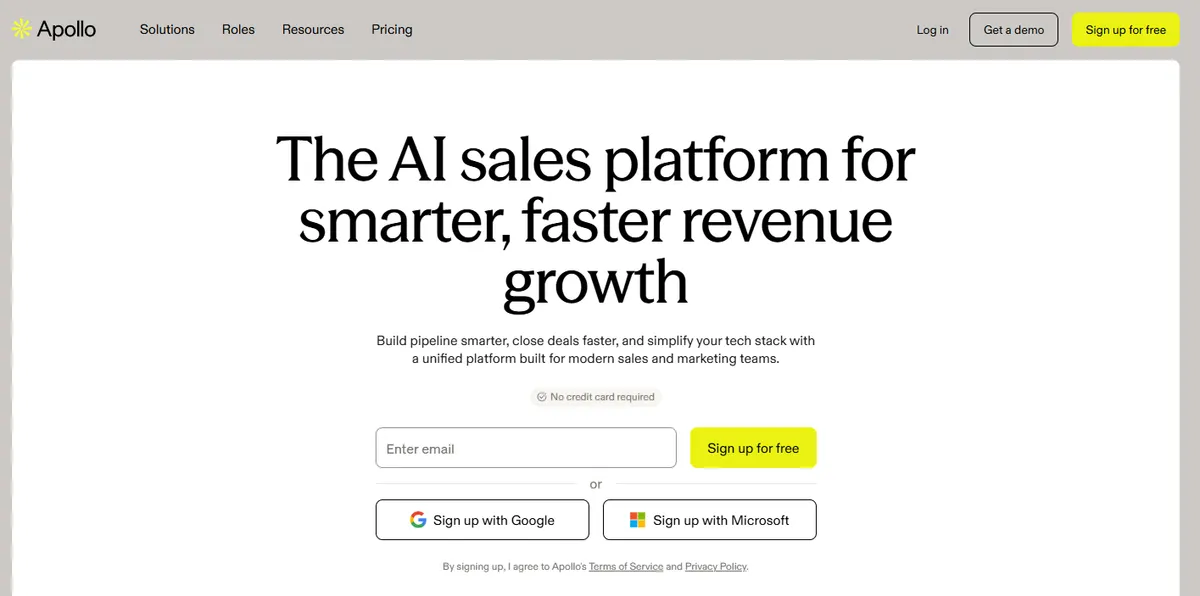
Best for: GTM Engineers who want enrichment combined with prospecting and sales workflows.
Apollo is particularly useful when I want prospecting, enrichment, and sales execution closer together.
Its API supports both people and organization enrichment.
The organization enrichment endpoint can use identifiers such as a domain, LinkedIn URL, website, or company name and return information including industry, revenue, employee count, funding, locations, and organizational hierarchy.
The people enrichment API can use information such as email, name, company domain, or person ID to identify and enrich contacts.
Apollo also provides bulk enrichment endpoints, including support for enriching up to ten people in one request.
Why I like Apollo?
I would consider Apollo when my GTM system needs:
- company enrichment
- contact enrichment
- prospect discovery
- email data
- phone data
- API access
- outbound workflows
- sales engagement
The major advantage is that I can combine data and execution in one broader platform.
Where Apollo fits best?
I would choose Apollo when:
I want enrichment closely connected to prospecting and outbound execution.
It is especially useful for lean GTM teams that do not want to assemble every component separately.
3. ZoomInfo
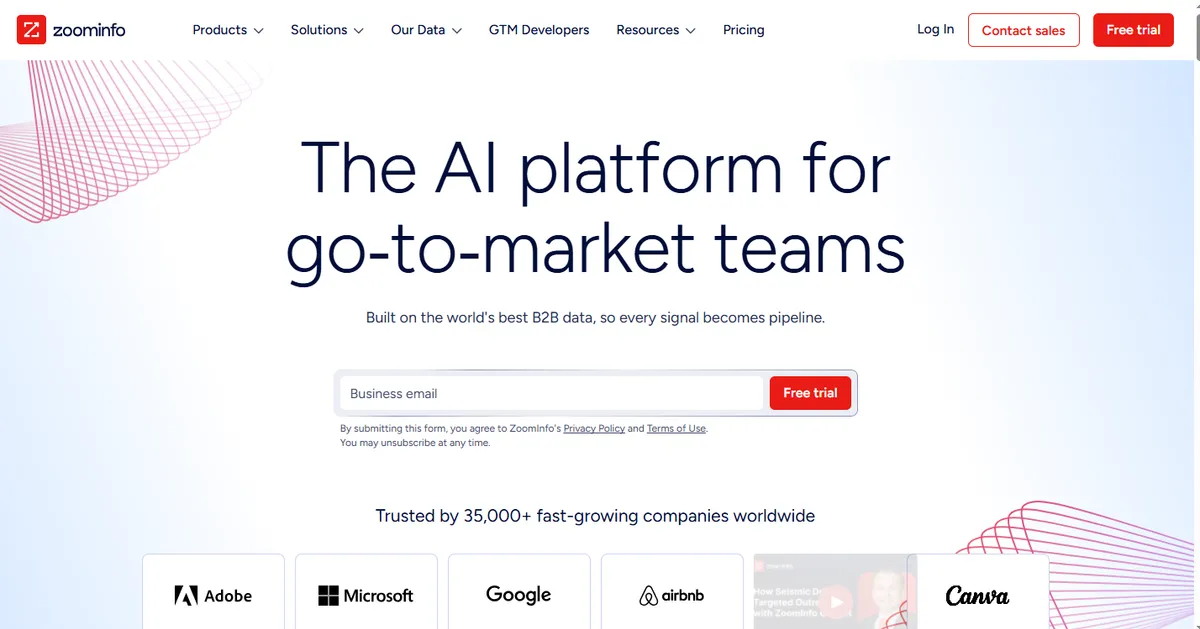
Best for: Enterprise GTM teams that need broad B2B intelligence and can support an enterprise data budget.
ZoomInfo is a different type of choice.
I would consider it when the organization needs a broad commercial intelligence layer across:
- companies
- contacts
- organizational structures
- technologies
- intent
- sales intelligence
The important point is that I would not automatically choose ZoomInfo because it is large.
I would evaluate:
Coverage
+
Accuracy
+
Freshness
+
Workflow Integration
+
Cost
=
Actual Value
For an enterprise GTM Engineering team, ZoomInfo can act as a major upstream data source.
But I may still connect it with other enrichment systems when I need additional coverage or specialized data.
4. Cognism
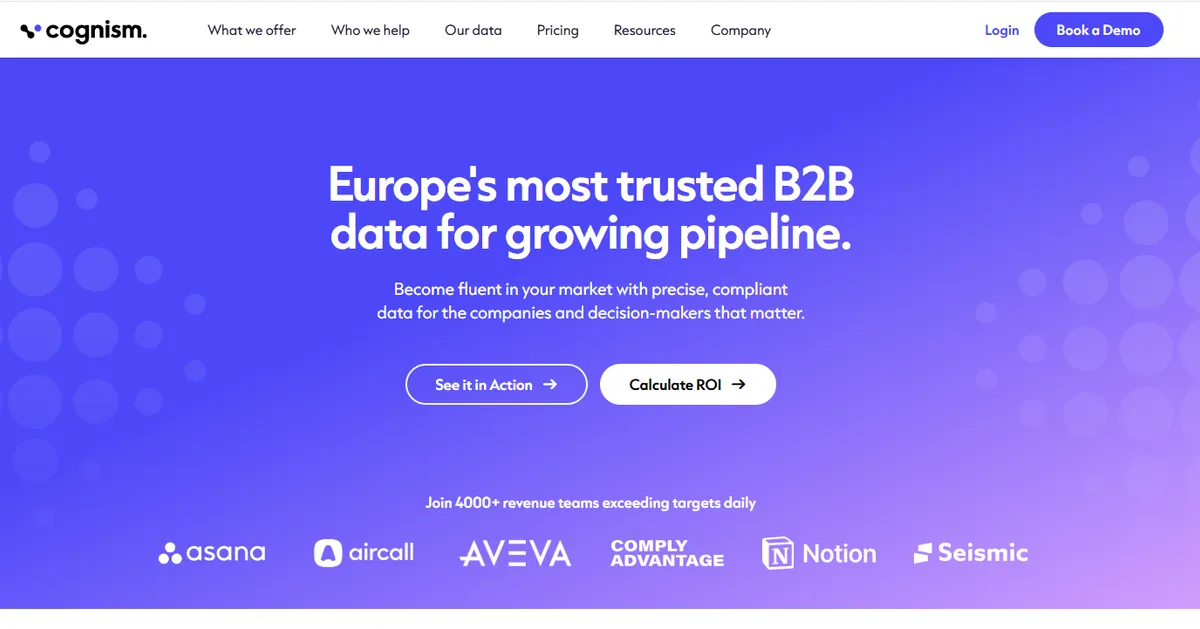
Best for: GTM teams that place a strong emphasis on international coverage, compliant B2B data, and phone intelligence.
Cognism is particularly relevant when phone data and international prospecting matter.
Its API enrichment offering is designed to connect B2B data directly to systems and automate enrichment workflows. Cognism describes API enrichment as a way to automatically update and complete records inside CRM and other systems.
I would consider it when my GTM motion includes:
- international sales
- phone-heavy outbound
- account enrichment
- CRM enrichment
- data compliance requirements
Where Cognism fits?
I would generally think about Cognism as:
A strong data provider that can become part of a broader GTM enrichment architecture.
5. People Data Labs
Best for: Developer-first GTM Engineers who want direct API access to person and company data.
People Data Labs is especially interesting to me when I want to build my own enrichment infrastructure.
Its Person Enrichment API allows me to look up profiles using information such as name, location, email, phone, education, work history, and social profile information. It also provides bulk processing and matching controls.
People Data Labs also provides a Company Enrichment API. Its company dataset currently advertises more than 70 million company profiles and supports API-based enrichment with proprietary matching logic.
The architecture is different from a workflow-first tool.
I can build:
My Application
      ↓
PDL API
      ↓
JSON
      ↓
My Database
      ↓
My GTM Logic
That gives me more control.
Where PDL fits best?
I would choose People Data Labs when:
- I have engineering resources
- I want API-first infrastructure
- I need custom data pipelines
- I want control over matching
- I do not need a large visual workflow builder
6. Clearbit / HubSpot data enrichment
Best for: HubSpot-centric GTM teams that want enrichment close to their CRM.
Clearbit is now part of HubSpot's broader data ecosystem, so I would evaluate it differently from independent enrichment platforms.
The biggest advantage is ecosystem proximity.
If my GTM system is heavily based on HubSpot, I care about how naturally enrichment flows into:
Website
 ↓
HubSpot
 ↓
Enrichment
 ↓
Segmentation
 ↓
Scoring
 ↓
Automation
This can be simpler than introducing a separate enrichment infrastructure.
I would therefore consider this option primarily when HubSpot is already the center of the GTM stack.
7. FullEnrich
Best for: Teams that want multi-provider contact enrichment without building the entire waterfall themselves.
The core idea behind tools in this category is straightforward:
Input Contact
      ↓
Provider A
      ↓
Provider B
      ↓
Provider C
      ↓
Best Available Result
This can be useful when email or phone coverage is more important than owning the underlying data infrastructure.
I would evaluate it based on:
- match rate
- phone coverage
- email coverage
- provider transparency
- API access
- workflow integrations
- pricing
The key question is whether the additional coverage justifies the additional enrichment cost.
8. Lusha
Best for: Teams that need straightforward contact and company enrichment.
Lusha is another option I would consider for contact data and prospecting workflows.
It can make sense for teams that do not need the complexity of a multi-provider enrichment architecture.
I would compare it against Apollo and Cognism based on:
- target geography
- contact coverage
- phone availability
- data accuracy
- API needs
- pricing
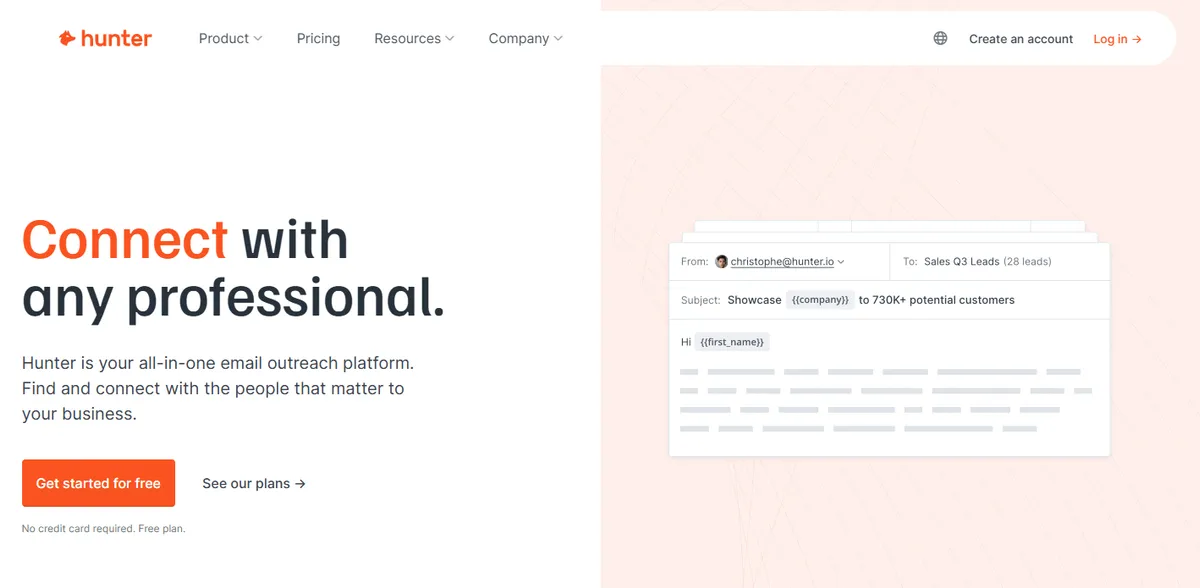
9. Hunter
Best for: Email-focused enrichment and verification workflows.
Hunter is more specialized than a broad account intelligence platform.
I would use it when the core requirement is around:
- finding professional email addresses
- email verification
- domain-based discovery
- email-related enrichment
I would not use it as my only GTM enrichment layer if I need deep account intelligence.
Instead, I would position it as a specialized component:
Account Data
+
Person Data
+
Email Discovery
+
Email Verification
How I choose between Clay and Apollo?
This is one of the most common decisions I would make.
I think about it like this:
Need flexible enrichment orchestration?
        ↓
Clay

Need prospecting + enrichment + sales execution?
        ↓
Apollo
Clay is stronger when I want to orchestrate multiple data sources and build complex enrichment workflows.
Apollo is attractive when I want prospect discovery, enrichment, and outbound execution closer together.
I would not ask:
Which tool is better?
I would ask:
Which layer does my GTM architecture need?
How I choose between Clay and People Data Labs?
The decision is different here.
Want workflow abstraction?
        ↓
Clay

Want API-level control?
        ↓
People Data Labs
If I am a GTM Engineer who writes code and wants to control the entire pipeline, a raw API can be more flexible.
If I want to build sophisticated enrichment workflows quickly without maintaining every provider integration, an orchestration platform can be more efficient.
How I build an enrichment stack?
I rarely want one tool doing everything.
My preferred architecture looks like:
CRM
 ↓
Identity Resolution
 ↓
Primary Enrichment
 ↓
Waterfall Provider
 ↓
Specialized Provider
 ↓
Validation
 ↓
Normalization
 ↓
ICP
 ↓
Negative ICP
 ↓
Signals
 ↓
Scoring
 ↓
Routing
 ↓
GTM Action


For example:

Salesforce
    ↓
Clay
    ↓
Apollo
    ↓
People Data Labs
    ↓
Technographic Provider
    ↓
Validation
    ↓
ICP
    ↓
Outbound
The actual providers can change.
The architecture is what matters.
Data enrichment and ICP
One of the first systems I build is enrichment-driven ICP qualification.
Suppose my ICP is:
100-2,000 employees
+
B2B SaaS
+
North America
+
Salesforce


I can turn that into:

Account
 ↓
Enrichment
 ↓
Employee Count
 ↓
Industry
 ↓
Location
 ↓
Technology
 ↓
ICP Score
Then I can route only qualified accounts into the next workflow.
This connects naturally with my Ideal Customer Profile and Negative ICP frameworks.
Data enrichment and Signal-based GTM
Enrichment becomes even more valuable when I stop treating it as static.
For example:

Current Employees = 300


is useful.

But:

Employees:
300 → 500

+
20 new sales hires

+
New VP Sales
is much more interesting.
The enrichment system can help me detect the change.
Then:
CHANGE
 ↓
SIGNAL
 ↓
ACCOUNT PRIORITY
 ↓
OUTREACH
This is why I connect enrichment with Signal-Based Selling and How to Build Signal-Based Systems.
Data enrichment and lead routing
Enrichment should happen before routing when routing depends on information I do not yet have.
For example:

New Lead
   ↓
Email
   ↓
Company Domain
   ↓
Company Enrichment
   ↓
Person Enrichment
   ↓
ICP
   ↓
Territory
   ↓
Account Tier
   ↓
Sales Rep
That creates much more intelligent routing.
It also connects directly to How to Build a Lead Routing System.
Data enrichment and AI agents
This is where I think GTM enrichment becomes even more important.
An AI agent needs context.
If I give an agent:
Company:
Acme


there is not enough information.

But if I give it:

Company:
Acme

Employees:
850

Industry:
B2B SaaS

CRM:
Salesforce

Recent Hiring:
+35 sales employees

New VP Sales:
Yes

ICP Fit:
94

Negative ICP Risk:
8
the agent can make a much better decision.
The architecture becomes:
Enrichment
    ↓
Context
    ↓
AI Agent
    ↓
Reasoning
    ↓
GTM Rule
    ↓
Action
That is one reason I see enrichment as a foundational layer for the AI GTM Engineer.
Build the Enrichment Layer Before Adding More GTM Automation
If I am already using multiple enrichment tools but my CRM is still inconsistent, I do not immediately add another provider.
I first map:
source → enrichment → validation → CRM → qualification → action.
That usually reveals whether I have a data problem, an orchestration problem, or a GTM logic problem.
Anfloy can help design that layer as part of a broader GTM Engineering system, connecting enrichment with qualification, signals, routing, AI, and automation.
How I evaluate enrichment data quality?
I track the enrichment system like an engineering system.
I monitor:
- match rate
- fill rate
- accuracy
- freshness
- duplicate rate
- missing fields
- confidence
- API failures
- latency
- cost per enriched record
- downstream conversion
For example:
Provider A
Match Rate: 72%

Provider B
Match Rate: 64%

Waterfall
Match Rate: 91%
The waterfall may therefore be more valuable than either provider alone.
But I also need to ask:
Did the additional matches actually improve GTM outcomes?
That is the more important metric.
Enrichment cost Is not the same as data value
A cheap provider is not necessarily the best provider.
Suppose:

Provider A
Cost: Low
Match Rate: 60%


and:

Provider B
Cost: Higher
Match Rate: 90%
If Provider B improves qualification and conversion significantly, its effective value may be higher.
I therefore think about:
Data Cost
+
Data Quality
+
Workflow Impact
+
Revenue Impact
=
Enrichment Value
My recommended enrichment stack by GTM stage
Early GTM Team
I would keep the stack simple.
Apollo
+
CRM


or:

Clay
+
One Primary Data Provider
The objective is to establish reliable enrichment without overengineering.
Growing GTM Team
I would add:
Primary Provider
+
Waterfall
+
Technographics
+
CRM Sync
+
Scoring
Now enrichment becomes infrastructure.
Advanced GTM Engineering Team
I would build:
Multiple Data Providers
        ↓
Orchestration
        ↓
Identity Resolution
        ↓
Validation
        ↓
Data Warehouse
        ↓
ICP
        ↓
Negative ICP
        ↓
Signals
        ↓
AI Agents
        ↓
Routing
        ↓
GTM Actions
At this stage, the enrichment tool is only one part of the system.
The data enrichment architecture I use
I reduce the entire system to:
RAW DATA
   ↓
IDENTITY
   ↓
ENRICHMENT
   ↓
VALIDATION
   ↓
NORMALIZATION
   ↓
ICP
   ↓
NEGATIVE ICP
   ↓
SIGNALS
   ↓
SCORING
   ↓
ROUTING
   ↓
GTM ACTION
   ↓
OUTCOME
   ↓
MODEL IMPROVEMENT
This is the important shift.
I do not build an enrichment stack simply to have better data.
I build it so my GTM system can make better decisions.
Conclusion
The best data enrichment tool for a GTM Engineer is not necessarily the tool with the largest database.
It is the tool that fits the architecture I am trying to build.
If I need flexible orchestration and waterfall enrichment, I look closely at Clay.
If I want prospecting, enrichment, and sales execution together, I consider Apollo.
If I need enterprise-scale commercial intelligence, I evaluate ZoomInfo.
If international coverage and phone intelligence are important, I consider Cognism.
If I want developer-first APIs and control over my infrastructure, I look at People Data Labs.
If I need HubSpot-native enrichment, I evaluate Clearbit / HubSpot's data ecosystem.
For specialized contact and email enrichment, I can add tools such as FullEnrich, Lusha, or Hunter.
But the tool is only one layer.
My actual GTM Engineering architecture is:
ENRICHMENT
     ↓
INTELLIGENCE
     ↓
ICP
     ↓
NEGATIVE ICP
     ↓
SIGNALS
     ↓
SCORING
     ↓
ROUTING
     ↓
AUTOMATION
     ↓
REVENUE
That is why I evaluate enrichment tools based on what they allow me to build, not just what data they claim to contain.
Build a GTM Enrichment System That Actually Drives Revenue
If your team is using several data providers but still has incomplete CRM records, inconsistent qualification, or manual research, the next step is not necessarily another enrichment subscription.
It is designing the system around the data.
Anfloy can help connect enrichment providers, CRM data, ICP rules, negative ICP, buying signals, routing, AI agents, and GTM workflows into one operating system.
Explore Anfloy's GTM Engineering approach.
Frequently asked questions
What is the best data enrichment tool for GTM Engineers?
There is no universal winner. I would generally start with Clay when I need enrichment orchestration and waterfall workflows, Apollo when I want prospecting and enrichment together, and People Data Labs when I want developer-first API access. The right choice depends on the GTM architecture, data requirements, and engineering resources.
Is Clay better than Apollo for GTM Engineers?
Not universally. I prefer Clay when I need to orchestrate multiple enrichment sources, waterfalls, and custom workflows. I prefer Apollo when prospecting, enrichment, and sales engagement need to work together in one platform.
Do GTM Engineers need multiple data enrichment providers?
Often, yes. No single provider is guaranteed to have the best match for every company, person, geography, or data type. A waterfall architecture can query multiple sources and use the best available result. Clay, for example, currently supports waterfall enrichment across 200+ data providers.
How should GTM Engineers measure an enrichment tool?
I would measure more than database size. The important metrics are match rate, accuracy, freshness, coverage, cost per usable record, API reliability, and the downstream impact on qualification, routing, conversion, and pipeline quality.
Let's build
what your
company needs.
Drop your email. We'll send The Custom Agent Blueprint on what we'd build first for a company like yours, before you ever take a meeting.