
10 Best Data Orchestration Tools For GTM Engineers
Discover the 10 best data orchestration tools for GTM Engineers in 2026, including Clay, Hightouch, n8n, Workato, Tray, Unify, and more.
On this page
- What Is data orchestration for GTM engineers?
- What should a GTM engineer look for in a data orchestration tool?
- 10 Best data orchestration tools for GTM engineers
- 1. Clay
- 2. Hightouch
- 3. n8n
- 4. Census
- 5. Workato
- 6. Tray.ai
- 7. Unify
- 8. Airbyte
- 9. Fivetran
- 10. Zapier
- Data orchestration tools vs data enrichment tools
- Data orchestration vs reverse ETL
- How I would build a GTM data orchestration stack?
- My recommended GTM orchestration architecture
- What is the future of GTM data orchestration?
- Build the GTM data layer before adding more automation
- Conclusion
When I build a GTM system, data movement is rarely the hardest problem.
The harder problem is making sure the right data reaches the right system at the right time and triggers the right action.
A new lead might enter through a form. Company data needs to be enriched. ICP fit needs to be evaluated. A buying signal may need to be detected.
The account might then need to be routed to the right salesperson, pushed into an outbound sequence, updated in the CRM, or passed to an AI agent for further research.
That is a data orchestration problem.
Traditional ETL tools solve part of it by moving data between systems. But modern GTM Engineering requires something broader: data ingestion, enrichment, transformation, synchronization, decision logic, signal processing, workflow execution, and activation across the revenue stack.
That is why I do not evaluate data orchestration tools simply by asking how many connectors they have.
I want to know whether the tool can help me turn fragmented GTM data into an operational system.
What Is data orchestration for GTM engineers?
I define GTM data orchestration as the process of coordinating data across the systems that power revenue execution.
A typical architecture looks like this:
Data Sources
     ↓
Ingestion
     ↓
Identity Resolution
     ↓
Enrichment
     ↓
Normalization
     ↓
Business Logic
     ↓
Scoring / Signals
     ↓
Routing
     ↓
Activation
     ↓
CRM / Sales / Marketing / AI
     ↓
Feedback
The important word is orchestration.
The goal is not simply to move a record from A to B.
The goal is to coordinate what happens to that record throughout the GTM workflow.
For example:
Website Visit
      ↓
Identify Account
      ↓
Enrich Company
      ↓
Check ICP
      ↓
Check Buying Signals
      ↓
Score Account
      ↓
Assign Priority
      ↓
Research Contact
      ↓
Create Sales Task
      ↓
Update CRM
      ↓
Measure Outcome
This is why data orchestration has become such an important part of GTM infrastructure.
A modern GTM infrastructure connects customer data, CRM, enrichment, automation, AI, and operational execution rather than treating every platform as an isolated application.
What should a GTM engineer look for in a data orchestration tool?
I would evaluate an orchestration platform across several dimensions.
1. Data connectivity
Can it connect to:
- CRM systems
- Data warehouses
- Enrichment providers
- Intent platforms
- Marketing systems
- Sales engagement tools
- Product data
- APIs
- Internal databases
2. Transformation
Can I:
- Clean data
- Normalize fields
- Deduplicate records
- Map schemas
- Apply business rules
- Transform records before activation
3. Workflow logic
Can I create:
- Conditions
- Branches
- Triggers
- Loops
- Webhooks
- Scheduled jobs
- Event-driven workflows
4. GTM activation
Can the resulting data actually reach:
- Salesforce
- HubSpot
- Sales engagement platforms
- Slack
- Advertising platforms
- Marketing automation
- AI agents
- Internal applications
5. Engineering control
Can I use:
- APIs
- Webhooks
- Custom code
- SQL
- Version control
- Self-hosting
- Monitoring
- Logs
The best choice depends on which layer of the GTM system I need to control.
10 Best data orchestration tools for GTM engineers
My 2026 shortlist is:
- Clay - Best for GTM-native data orchestration
- Hightouch - Best for warehouse-to-GTM activation
- n8n - Best for technical and customizable workflows
- Census - Best for reverse ETL and warehouse activation
- Workato - Best for enterprise integration and orchestration
- Tray.ai - Best for enterprise API and workflow orchestration
- Unify - Best for signal-driven GTM orchestration
- Airbyte - Best for flexible data movement and activation
- Fivetran - Best for managed data pipelines
- Zapier - Best for simple GTM automation and application connectivity
These tools overlap, but they are not interchangeable.
Some are GTM-native.
Some are reverse ETL platforms.
Some are general integration platforms.
Some are data movement infrastructure.
And some are workflow automation tools.
The important question is where each tool fits into your architecture.
1. Clay
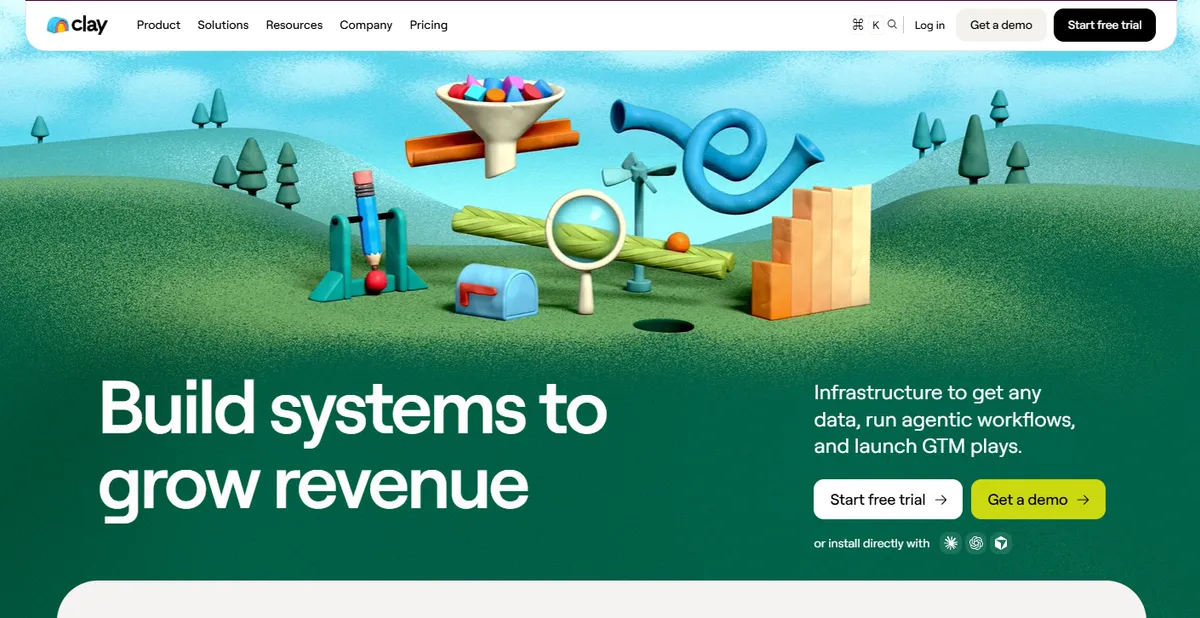
Best for: GTM-native data orchestration, enrichment, signals, AI research, and workflow execution
Clay is one of the most directly aligned platforms with the way I think about GTM Engineering.
Instead of treating data orchestration as a backend data engineering problem, Clay combines data sourcing, enrichment, AI research, signals, workflow logic, and GTM activation.
Clay currently describes its platform as GTM infrastructure for getting data, running agentic workflows, and launching GTM plays. Its data marketplace provides access to 200+ data and AI providers, while its orchestration capabilities connect GTM tools to a common data layer.
Its newer Workflows capability makes the orchestration model even more explicit.
A workflow can start from a trigger, branch based on logic, process individual records, and write results back into the GTM data layer. Clay specifically describes use cases including inbound qualification and routing, signal-based outbound, and account-based marketing.
I would use Clay when the workflow looks like:
Account
  ↓
Enrichment
  ↓
AI Research
  ↓
Signal Detection
  ↓
ICP Scoring
  ↓
Decision
  ↓
CRM / Outbound
It is particularly useful when I need to combine multiple data sources rather than rely on one provider.
Where Clay fits?
Data → Enrichment → Intelligence → Decision → Action
Best use cases
- GTM enrichment
- TAM building
- Signal-based prospecting
- Lead qualification
- Account research
- AI research
- Lead routing
- Outbound automation
- CRM enrichment
For GTM Engineers, Clay is less like a conventional ETL platform and more like a programmable GTM data and orchestration layer.
2. Hightouch
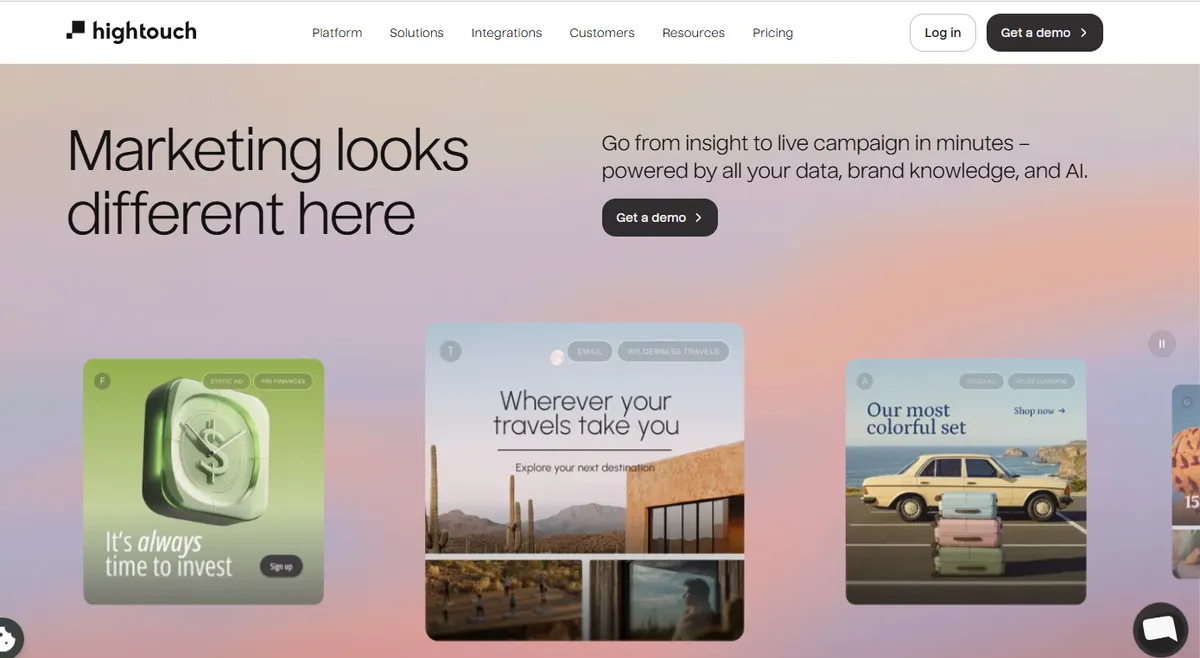
Best for: Reverse ETL and activating warehouse data inside GTM systems
Hightouch becomes particularly useful when the company's data warehouse is already the source of truth.
Instead of rebuilding customer intelligence inside every GTM application, I can create the data model in the warehouse and then synchronize the resulting records into operational systems.
Hightouch currently supports syncing warehouse data to 300+ destinations and supports both recurring and real-time synchronization. It also provides API control, Git-based workflows, staging environments, and custom integrations.
The architecture looks like:
Product Data
      +
CRM Data
      +
Billing Data
      +
Marketing Data
      ↓
Data Warehouse
      ↓
SQL / Data Models
      ↓
Hightouch
      ↓
Salesforce / HubSpot / Ads / Marketing
This is powerful because GTM teams do not need to manually recreate warehouse intelligence inside their CRM.
For example, I could calculate:
Account Health Score
Expansion Probability
Product Usage Score
ICP Score
Customer Lifecycle Stage
inside the warehouse and then push those attributes into Salesforce.
Hightouch is therefore particularly useful for companies where data engineering and GTM Engineering already meet around a warehouse.
Best use cases
- Reverse ETL
- CRM synchronization
- Customer data activation
- Product-led GTM
- Warehouse-to-GTM pipelines
- Audience activation
- Operational analytics
Hightouch's own documentation describes Reverse ETL as a way to make warehouse data available inside the operational systems business teams use every day.
3. n8n
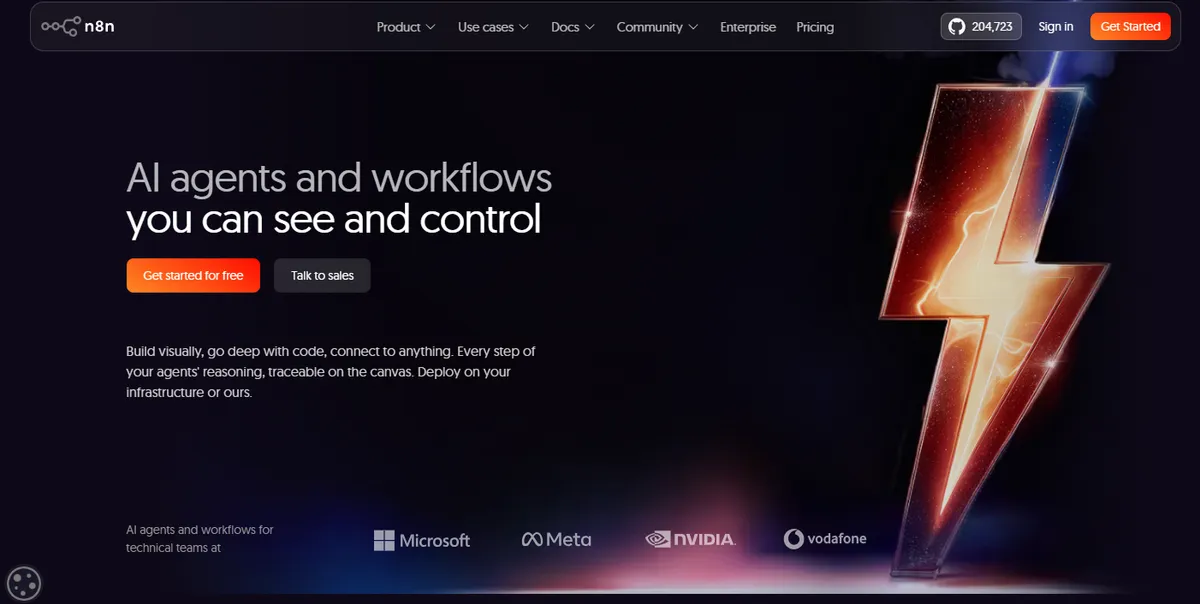
Best for: Custom GTM workflows, APIs, webhooks, and technical control
n8n is one of the tools I would consider when I want more control over the orchestration logic.
It provides a visual workflow builder but still gives technical teams access to APIs, custom logic, webhooks, and self-hosting.
Its integration directory currently lists more than 2,000 integrations, covering categories including AI, data and storage, marketing, sales, developer tools, and productivity.
That makes n8n useful as the connective layer between otherwise disconnected GTM systems.
For example:
Webhook
   ↓
CRM Record
   ↓
HTTP Request
   ↓
Enrichment API
   ↓
AI Classification
   ↓
Business Logic
   ↓
CRM Update
   ↓
Slack Notification
I particularly like n8n when the workflow needs custom API calls that a traditional SaaS automation platform does not handle elegantly.
Best use cases
- API orchestration
- Webhooks
- Custom enrichment
- AI workflows
- CRM automation
- Internal GTM tools
- Data transformation
- Custom routing
- Self-hosted workflows
The tradeoff is that n8n generally requires more technical ownership than simpler no-code automation platforms.
For a GTM Engineer, that can be a feature rather than a limitation.
4. Census
Best for: Warehouse-first GTM data activation
Census belongs in this list because reverse ETL is one of the most important forms of GTM data orchestration.
The basic problem is simple.
Your data warehouse may contain the best version of your customer and account intelligence, but your sales and marketing teams do not work inside the warehouse.
They work inside:
- Salesforce
- HubSpot
- Marketo
- advertising platforms
- customer engagement platforms
- sales tools
Reverse ETL connects those two worlds.
Census is specifically positioned around syncing warehouse data into business applications, with capabilities such as data activation, segmentation, and sync monitoring. Airbyte's current comparison of reverse ETL platforms identifies Census and Hightouch as dedicated reverse ETL specialists.
A GTM Engineer can therefore use a warehouse as the intelligence layer:
Raw Data
   ↓
Warehouse
   ↓
dbt / SQL
   ↓
GTM Models
   ↓
Census
   ↓
CRM
   ↓
Sales Execution
Best use cases
- Reverse ETL
- CRM activation
- Customer segmentation
- Warehouse-first GTM
- Account scoring
- Lifecycle data
- Marketing activation
If your company has a mature data warehouse and wants GTM systems to consume that data reliably, Census belongs on the shortlist.
5. Workato
Best for: Enterprise integration, governance, and cross-system orchestration
Workato is broader than GTM Engineering.
It is an enterprise integration and automation platform designed to connect applications, data, workflows, and increasingly AI agents.
Its current platform positioning emphasizes connecting apps and data, orchestrating workflows and agents, governance, audit trails, and enterprise controls.
That makes it relevant when GTM orchestration extends beyond sales and marketing.
For example:
CRM
 ↓
ERP
 ↓
Billing
 ↓
Customer Success
 ↓
Support
 ↓
Marketing
 ↓
AI Agent
A GTM Engineer working in a large organization may need exactly this type of cross-functional orchestration.
Best use cases
- Enterprise GTM integration
- CRM and ERP workflows
- Revenue operations
- Cross-functional automation
- Governance
- AI agent orchestration
- Application integration
The main reason I would consider Workato over a lighter GTM tool is enterprise complexity.
When governance, permissions, monitoring, and integration breadth matter as much as workflow speed, enterprise iPaaS becomes more relevant.
6. Tray.ai
Best for: API-heavy enterprise orchestration and complex integrations
Tray sits in a similar category but is particularly interesting when I need to combine application integration, APIs, automation, and AI.
Tray currently describes its platform as supporting integration and automation, AI agents, API management, and governance across more than 700 connectors.
A GTM Engineer could use it to build something like:
CRM Event
   ↓
Tray
   ↓
API Calls
   ↓
Data Enrichment
   ↓
AI Processing
   ↓
Business Rules
   ↓
CRM
   ↓
Sales Engagement
Best use cases
- Complex API integrations
- Enterprise automation
- Data integration
- AI workflows
- Application orchestration
- Governance
- Multi-system GTM processes
I would consider Tray when the workflow is too complex for a basic automation tool but the company does not want every integration implemented as custom application code.
7. Unify

Best for: Signal-driven GTM orchestration
Unify is different from the traditional data pipeline tools in this list.
Its focus is much closer to the actual GTM motion.
Unify combines multiple intent and signal sources and allows teams to trigger outbound plays from those signals. Its current product documentation says it supports 40+ data sources and can trigger actions such as enrichment, prospecting, AI agents, sequencing, and Slack alerts.
That makes the architecture look like:
Intent
   +
Website Activity
   +
Job Changes
   +
Product Signals
   ↓
Unify
   ↓
Qualification
   ↓
AI Research
   ↓
Outbound Play
This is especially relevant to the shift from list-based GTM to event-driven GTM.
Instead of asking:
Which accounts should I upload?
I can ask:
Which accounts just changed in a way that creates a reason to act?
That is the same principle behind Anfloy's signal-based systems, where the architecture moves from data collection toward signal detection, enrichment, scoring, decision-making, routing, and action.
Best use cases
- Signal-based outbound
- Intent orchestration
- Website signals
- Job-change signals
- Product signals
- AI-powered prospecting
- Outbound plays
Unify is therefore most relevant when signals are the trigger for the GTM workflow.
8. Airbyte
Best for: Flexible data movement and open-source-oriented data infrastructure
Airbyte is more data-engineering oriented than most GTM-native tools on this list.
That is precisely why it can be valuable.
Airbyte currently supports hundreds of connectors and provides capabilities for data synchronization, ingestion, replication, and data activation.
Its documentation describes data activation as syncing insights from a warehouse into operational tools such as Salesforce, Customer.io, and HubSpot.
The architecture can look like:
CRM
+
Product Database
+
Application Data
+
SaaS Data
      ↓
Airbyte
      ↓
Warehouse
      ↓
Transformation
      ↓
GTM Models
      ↓
Activation
Airbyte is especially interesting when the GTM Engineer works closely with data engineering.
Best use cases
- Data ingestion
- Data replication
- Warehouse pipelines
- Data activation
- Custom connectors
- Self-hosted infrastructure
- Technical GTM data stacks
I would not choose Airbyte simply because a GTM workflow needs two SaaS applications connected.
I would choose it when data movement itself is becoming infrastructure.
9. Fivetran
Best for: Managed data pipelines and reliable ingestion
Fivetran occupies a similar infrastructure layer to Airbyte, but with a strong managed-service orientation.
The core problem it solves is keeping data moving from SaaS applications, databases, and other sources into a central data platform.
Fivetran explains that data connectors abstract away common integration problems such as API authentication, pagination, rate limits, and data-format normalization.
That matters because GTM systems increasingly depend on data from dozens of applications.
For example:
Salesforce
HubSpot
Stripe
Product Database
Support
Marketing
Billing
     ↓
Fivetran
     ↓
Warehouse
     ↓
GTM Data Models
     ↓
Reverse ETL
     ↓
Sales / Marketing
Best use cases
- Managed data ingestion
- SaaS-to-warehouse pipelines
- CRM data integration
- Product data
- Revenue analytics
- Enterprise data infrastructure
Fivetran is less about building a GTM play directly and more about creating the data foundation that downstream GTM orchestration depends on.
10. Zapier
Best for: Simple GTM application automation
Zapier is the simplest tool on this list, but that does not make it irrelevant.
Not every GTM workflow needs a sophisticated data infrastructure layer.
Sometimes I simply need:
New Lead
   ↓
Enrich
   ↓
Add to CRM
   ↓
Notify Slack


Or:

New CRM Opportunity
   ↓
Create Task
   ↓
Notify Account Owner
Zapier is useful for these relatively straightforward application-to-application workflows.
Anfloy's broader GTM Engineering tools guide similarly places Zapier among the options for simpler workflow automation, while positioning n8n for more technical control.
Best use cases
- Simple CRM automation
- Lead notifications
- Application integration
- Basic enrichment triggers
- Marketing automation
- Internal notifications
- Lightweight GTM workflows
I would not use Zapier as the foundation of a highly complex GTM data architecture.
But for a small team that needs to automate a handful of repetitive workflows quickly, it can be sufficient.
Data orchestration tools vs data enrichment tools
These categories are easy to confuse.
They solve different problems.
A data enrichment platform answers:
What information can I add to this account?
A data orchestration platform answers:
What should happen to this information after I get it?
For example:
Company
   ↓
Enrichment
   ↓
Employee Count
Industry
Technology
Funding
Hiring
   ↓
Orchestration
   ↓
ICP Score
   ↓
Signal Score
   ↓
Routing
   ↓
CRM
   ↓
Outbound
That is why I treat enrichment as one component of the broader GTM data layer.
My GTM enrichment API framework follows the same progression:
Identify
   ↓
Enrich
   ↓
Validate
   ↓
Context
   ↓
ICP
   ↓
Signals
   ↓
Scoring
   ↓
Routing
   ↓
Action
The enrichment provides the intelligence.
The orchestration system determines what happens next.
Data orchestration vs reverse ETL
Reverse ETL is also a component of data orchestration.
The difference is scope.
Reverse ETL
Warehouse
↓
CRM
Data orchestration
Sources
   ↓
Ingestion
   ↓
Warehouse
   ↓
Transformation
   ↓
Enrichment
   ↓
Signals
   ↓
Scoring
   ↓
Routing
   ↓
CRM
   ↓
Sales
Hightouch and Census are particularly relevant when the warehouse is the source of truth.
Clay and Unify become more interesting when GTM-specific signals and execution logic are central.
n8n, Workato, and Tray become more useful when complex application workflows need to be coordinated.
Airbyte and Fivetran become more important when the core challenge is reliable data movement.
That distinction makes tool selection much easier.
How I would build a GTM data orchestration stack?
I would not start by buying ten tools.
I would start with the architecture.
Layer 1: Data sources
Collect:
- CRM data
- Product data
- Website behavior
- Marketing data
- Sales conversations
- Intent data
- Firmographic data
- Technographic data
- External signals
Layer 2: Data foundation
Use:
- Data warehouse
- CRM
- Operational databases
- Unified GTM data layer
The goal is to create a reliable source of truth.
Layer 3: Enrichment
Add:
- Company attributes
- Contact attributes
- Technology
- Funding
- Hiring
- Intent
- Account context
Layer 4: Orchestration
Apply:
- Business rules
- Conditional logic
- Signal processing
- Scoring
- Routing
- AI research
- Workflow triggers
Layer 5: Activation
Send the output to:
- CRM
- Sales engagement
- Marketing
- Slack
- Ads
- Customer success
- AI agents
Layer 6: Feedback
Measure:
- Response
- Meetings
- Opportunities
- Pipeline
- Revenue
- False positives
- Data quality
- Signal performance
That creates a closed loop.
DATA
 ↓
CONTEXT
 ↓
DECISION
 ↓
ACTION
 ↓
OUTCOME
 ↓
FEEDBACK
 ↓
BETTER DATA
My recommended GTM orchestration architecture
For a modern B2B company, I would think about the stack like this:
DATA SOURCES
                      ↓
       ┌─────────────────────────┐
       │ CRM / Product / Web     │
       │ Intent / Marketing      │
       │ External Data / APIs    │
       └─────────────────────────┘
                      ↓
              DATA FOUNDATION
                      ↓
        ┌────────────────────────┐
        │ Warehouse / GTM Layer  │
        └────────────────────────┘
                      ↓
                ENRICHMENT
                      ↓
             SIGNAL DETECTION
                      ↓
               ORCHESTRATION
                      ↓
              AI / DECISIONING
                      ↓
               ACTIVATION
                      ↓
       ┌─────────────────────────┐
       │ CRM / Sales / Marketing │
       │ Slack / Ads / CS / AI   │
       └─────────────────────────┘
                      ↓
                  OUTCOME
                      ↓
                  FEEDBACK
The exact products can change.
The architecture should not.
This is the principle I use when thinking about GTM Engineering tools. Tools are implementation components inside the system, not the system itself.
What is the future of GTM data orchestration?
I think GTM data orchestration is moving through three stages.
Stage 1: Integration
Connect the applications.
CRM ↔ Marketing ↔ Sales
Stage 2: Orchestration
Connect data with business logic.
Data
 ↓
Rules
 ↓
Workflow
 ↓
Action
Stage 3: Agentic orchestration
Connect data, workflows, and AI decision-making.
Data
 ↓
Signals
 ↓
Context
 ↓
AI Agent
 ↓
Decision
 ↓
Action
 ↓
Feedback
This is where GTM Engineering becomes much more interesting.
The system no longer needs a human to manually inspect every record and decide what should happen next.
An AI agent can investigate an account, gather context, evaluate evidence, select a workflow, and prepare an action.
But the underlying data orchestration layer still matters.
An agent without reliable data is simply an intelligent system operating with incomplete context.
That is why I see data + orchestration + agents becoming the core architecture of modern GTM Engineering.
Build the GTM data layer before adding more automation
If your GTM team has:
- multiple enrichment platforms
- several intent sources
- CRM data
- product data
- marketing data
- AI agents
- outbound tools
- spreadsheets
- internal databases
the problem may not be that you need another tool.
You may need a better orchestration layer.
The goal is to create a system where data moves reliably from source to decision to action.
That means:
SOURCE
 ↓
IDENTIFY
 ↓
ENRICH
 ↓
VALIDATE
 ↓
CONTEXTUALIZE
 ↓
SCORE
 ↓
DECIDE
 ↓
ROUTE
 ↓
ACT
 ↓
MEASURE
This is the foundation for signal-based GTM, AI-powered sales workflows, automated lead routing, and increasingly autonomous revenue systems.
If you are designing that architecture, the first decision should not be which tool to buy.
It should be what the system needs to do.
Conclusion
Data orchestration is becoming one of the core disciplines of GTM Engineering.
The modern GTM Engineer is not simply connecting applications.
They are building systems that move from:
Data → Context → Decision → Action → Outcome
That requires more than an ETL pipeline.
It requires a combination of data movement, enrichment, transformation, signals, business logic, AI, workflow automation, CRM synchronization, and feedback.
The tools in this list solve different parts of that problem.
Clay is particularly suited to GTM-native orchestration.
Hightouch and Census are strong choices when the warehouse is the center of the architecture.
n8n is useful when technical control and custom workflows matter.
Workato and Tray.ai fit complex enterprise integration environments.
Unify is focused on signal-driven GTM execution.
Airbyte and Fivetran provide the data movement foundation.
Zapier remains useful for simpler application automation.
But the tool is only one part of the system.
The real advantage comes from designing the architecture around the GTM motion first and then choosing the orchestration layer that can reliably execute it.
That is the difference between connecting tools and engineering a GTM system.
Frequently Asked Questions
What is data orchestration in GTM?
GTM data orchestration is the process of coordinating data across CRM, enrichment, intent, product, marketing, warehouse, AI, and sales systems so information can be transformed into operational actions. It goes beyond simple data integration by adding business logic, routing, scoring, triggers, and activation.
What is the best data orchestration tool for GTM Engineers?
There is no universal choice because the tools solve different orchestration problems. Clay is designed around GTM-native data and workflows, Hightouch and Census are strong for warehouse activation, n8n provides technical workflow control, and platforms such as Workato and Tray.ai address broader enterprise integration requirements.
What is the difference between data orchestration and ETL?
ETL primarily focuses on extracting, transforming, and loading data between systems. Data orchestration coordinates the broader lifecycle, including when data moves, what logic is applied, what systems receive the output, what action is triggered, and how the outcome feeds back into the system.
Do GTM Engineers need a data warehouse?
Not always. Smaller GTM systems can operate directly across CRM, enrichment, and automation platforms. As data volume and complexity increase, however, a warehouse can become an important source of truth for customer, product, revenue, and behavioral data. Reverse ETL tools can then activate those models in operational GTM systems.
Let's build
what your
company needs.
Drop your email. We'll send The Custom Agent Blueprint on what we'd build first for a company like yours, before you ever take a meeting.