
GTM Engineering Tools: The Complete 2026 Guide
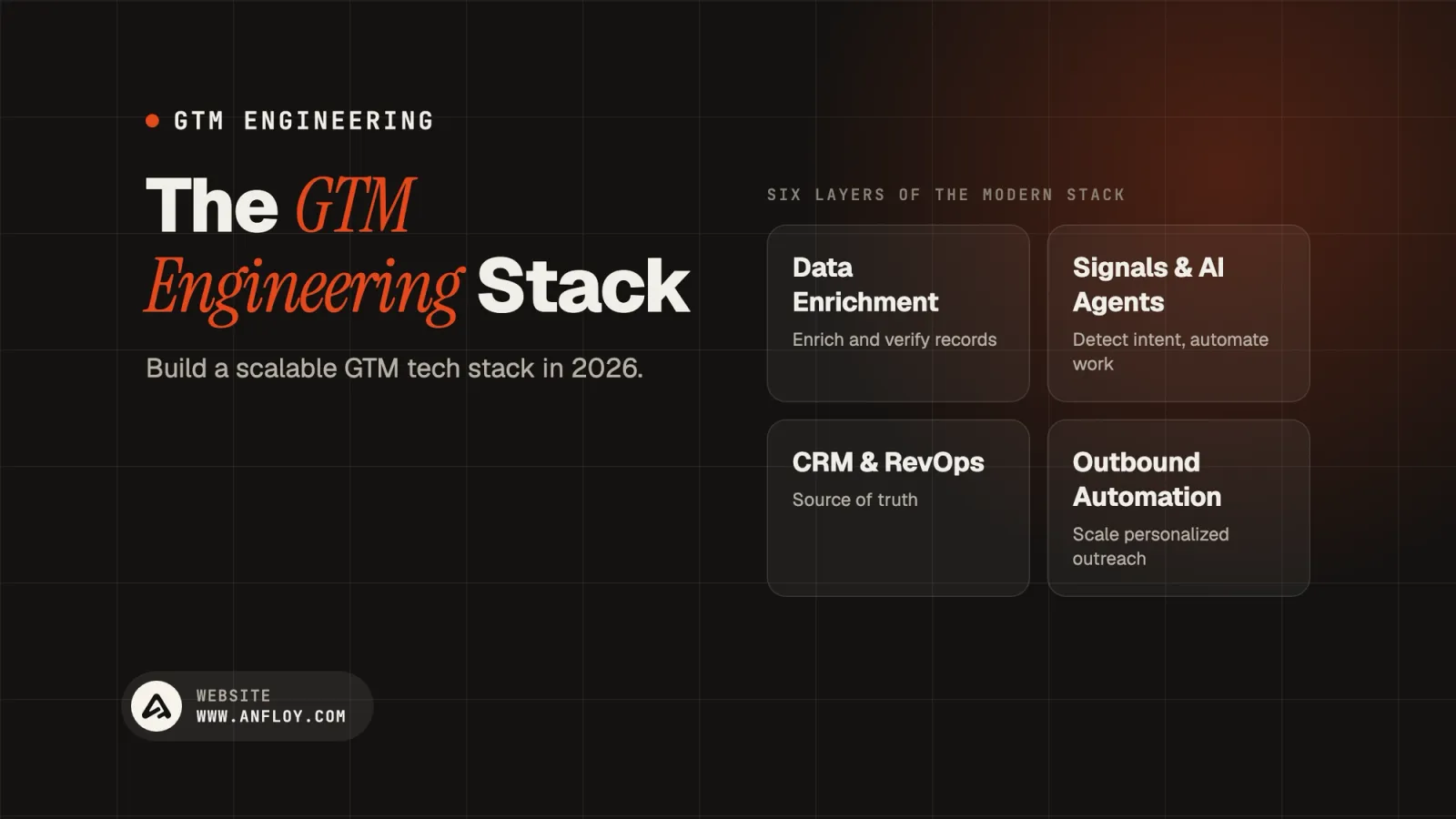
Explore the best GTM engineering tools for data enrichment, automation, AI agents, signals, CRM, outbound, and revenue operations. Build a scalable GTM tech stack in 2026.
On this page
- What are GTM engineering tools?
- What is GTM in engineering?
- GTM tools vs GTM engineering tools
- The GTM engineering tool stack
- How we evaluate GTM engineering tools?
- The 2026 GTM engineering tools landscape
- Best GTM engineering tools in 2026
- More GTM engineering tools to consider
- Best GTM engineering tool for data enrichment
- Best GTM engineering tool for workflow automation
- Best GTM Engineering Tool for Prospecting
- Best GTM Engineering Tool for AI Research
- Best free GTM engineering tools
- How to build a GTM engineering tech stack?
- A lean GTM engineering stack
- A Mid-market GTM engineering stack
- An enterprise GTM engineering stack
- How many GTM engineering tools do you actually need?
- The GTM Engineering Tool Evaluation Checklist
- GTM Engineering Tools and the Role of the GTM Engineer
- Conclusion
GTM Engineering tools are changing how revenue teams build and operate their go-to-market systems.
Traditional GTM teams often assemble separate tools for prospecting, enrichment, CRM, sales engagement, automation, analytics, and intent data. A GTM Engineer connects these systems into workflows that turn raw information into revenue actions.
That makes GTM engineering tools different from a generic list of sales or marketing software.
The right tool is not necessarily the one with the most features.
It is the tool that fits a specific part of the GTM system and can reliably connect with the other components.
A modern GTM Engineering stack can look like:
Data → Enrichment → Signals → AI → Workflow → CRM → Sales Activation → Measurement
Current GTM tool research shows that the category spans enrichment, workflow automation, intent signals, sales sequencing, CRM operations, and revenue analytics.
This guide explains the GTM engineering tools that fit those layers, what each category does, how to evaluate them, and how to build a stack without creating unnecessary technical complexity.
What are GTM engineering tools?
GTM engineering tools are software platforms that help teams collect, enrich, transform, analyze, automate, and activate go-to-market data and workflows.
They can support tasks such as:
- Finding companies and contacts
- Enriching CRM records
- Detecting buying signals
- Automating workflows
- Building AI agents
- Researching accounts
- Routing leads
- Executing outbound sequences
- Managing CRM data
- Analyzing sales conversations
- Synchronizing data between systems
The important distinction is that GTM engineering tools are usually evaluated as components of a system, not as isolated applications.
For example:

Company Data
     ↓
Enrichment
     ↓
Signal Detection
     ↓
AI Qualification
     ↓
Lead Scoring
     ↓
Routing
     ↓
Sales Engagement
     ↓
Revenue Measurement
Each layer can use a different tool.
A GTM Engineer's job is to make those layers work together.
What is GTM in engineering?
In this context, GTM means Go-to-Market.
GTM Engineering applies engineering principles to revenue processes.
Instead of building software for the customer-facing product, a GTM Engineer builds systems that help the company acquire, qualify, convert, and expand customers.
This can include:
- APIs
- CRM systems
- Data pipelines
- Enrichment
- Automation
- AI agents
- Webhooks
- Workflow orchestration
- Lead routing
- Signal-based selling
- Revenue analytics
The function sits at the intersection of:
GTM Strategy + RevOps + Data + Engineering + AI
A simplified model is:
GTM Strategy
      ↓
Revenue Process
      ↓
GTM Engineering
      ↓
Data + Systems + AI
      ↓
Automated Execution
GTM tools vs GTM engineering tools
The terms are related, but they are not identical.
GTM tools is a broad category.
It can include almost any software used by sales, marketing, customer success, or revenue teams.
GTM engineering tools are more specifically useful for building or connecting the underlying systems that execute GTM processes.
For example:
| Category | Typical GTM Use | GTM Engineering Use |
|---|---|---|
| CRM | Manage opportunities | Build data and workflow logic |
| Enrichment | Find contact information | Populate and transform records |
| Automation | Automate tasks | Orchestrate multi-system workflows |
| Intent | Identify interest | Trigger account-level actions |
| Sales engagement | Send sequences | Programmatically activate prospects |
| AI | Generate content | Build decision and research workflows |
| Analytics | View reports | Feed revenue signals into workflows |
The distinction is important when choosing tools.
A platform can be excellent for salespeople while being less useful for a GTM Engineer who needs APIs, webhooks, structured data, conditional logic, and integrations.
The GTM engineering tool stack
A complete GTM Engineering stack can be divided into several layers.
1. Data and prospecting
These tools help identify:
- Companies
- Contacts
- Decision-makers
- Firmographic attributes
- Technographic attributes
2. Data enrichment
Enrichment adds missing information to existing records.
Common enrichment attributes include:
- Company size
- Revenue
- Industry
- Location
- Job title
- Seniority
- Technology
- Contact information
3. Signal intelligence
Signal tools identify changes that may affect account priority.
Examples include:
- Hiring
- Funding
- Leadership changes
- Job changes
- Technology changes
- Website activity
- Product launches
- Intent
Some modern GTM platforms combine enrichment and real-time signal detection rather than treating them as completely separate systems.
4. Workflow automation
Automation tools connect systems and execute repeatable processes.
For example:

New Lead
   ↓
Enrich
   ↓
Score
   ↓
Route
   ↓
Update CRM
   ↓
Notify Sales
5. AI and agent platforms
AI tools can perform tasks that require interpretation.
Examples include:
- Account research
- Lead qualification
- Signal analysis
- Personalization
- Data classification
- Sales research
- Workflow decisions
AI agents extend this by allowing systems to perform multi-step tasks using connected tools.
6. CRM and Revenue operations
The CRM usually remains the system of record.
GTM Engineers use it to:
- Store customer information
- Manage ownership
- Track lifecycle stages
- Trigger workflows
- Store enrichment
- Track opportunities
- Measure outcomes
7. Sales engagement
These platforms activate qualified accounts through:
- Calls
- Tasks
- Multichannel sequences
- Sales cadences
The engineering layer connects enriched and qualified data to these activation systems.
8. Revenue intelligence
Conversation intelligence and revenue analytics can provide another signal layer.
For example:
Sales conversation → AI analysis → Competitor signal → CRM update → Follow-up workflow
This creates a feedback loop between sales conversations and the wider GTM system.
How we evaluate GTM engineering tools?
A useful GTM engineering tool should not be evaluated only by its feature count.
We use six dimensions.
1. Workflow coverage
Does the platform solve an important part of the GTM workflow?
2. Integration depth
Can it connect through:
- APIs
- Webhooks
- Native integrations
- Data sync
- Custom requests
3. Automation
Can the tool execute repeatable processes without manual intervention?
4. Data quality
Does it provide reliable, current, and usable information?
5. Flexibility
Can a GTM Engineer customize the workflow rather than being limited to predefined use cases?
6. Economics
Consider:
- Subscription cost
- Usage-based credits
- Per-seat pricing
- API costs
- Data costs
- Implementation effort
- Maintenance cost
These dimensions align with the broader evaluation criteria used in current GTM engineering tool comparisons, including workflow coverage, integration depth, automation, data quality, scalability, and pricing.
The 2026 GTM engineering tools landscape
The market can be organized into these major categories:
| GTM Layer | What It Does | Example Tools |
|---|---|---|
| GTM orchestration | Connects multiple GTM processes | Anfloy, n8n |
| Data enrichment | Adds account/contact information | Clay, ZoomInfo, Apollo |
| Prospecting | Finds companies and contacts | Apollo, ZoomInfo |
| Signal intelligence | Detects account changes | SyncGTM, ZoomInfo |
| CRM | Stores revenue records | HubSpot, Salesforce |
| Sales engagement | Activates outbound | Outreach, Salesloft |
| Conversation intelligence | Analyzes sales interactions | Gong |
| Data activation | Moves warehouse data into GTM tools | Hightouch |
| AI agents | Executes research and GTM tasks | AI agent platforms |
| Workflow automation | Connects systems and actions | n8n |
Current industry lists similarly separate GTM engineering platforms across enrichment, automation, intent, sequencing, CRM operations, and analytics.
The important point is that there is no universally best GTM engineering stack.
The right architecture depends on:
- Company size
- GTM motion
- Data volume
- Technical expertise
- CRM
- Sales process
- AI maturity
- Budget
- Required automation
Best GTM engineering tools in 2026
Rather than ranking every tool on one generic scale, the better approach is to evaluate them according to the GTM problem they solve.
The following tools represent different layers of the modern GTM engineering stack.
1. Anfloy: GTM engineering and revenue workflow automation

Anfloy is designed around the broader GTM Engineering problem: connecting data, AI, automation, and revenue workflows into operational systems.
Instead of treating enrichment, signals, AI research, lead routing, and workflow automation as unrelated activities, the approach is to connect them into an end-to-end GTM process.
A workflow could look like:

Target Account
      ↓
Data Enrichment
      ↓
Signal Detection
      ↓
AI Research
      ↓
ICP Qualification
      ↓
Account Scoring
      ↓
Lead Routing
      ↓
Sales Activation
      ↓
CRM
      ↓
Revenue Feedback
Best for
- GTM Engineering
- Revenue workflow automation
- AI-powered GTM systems
- Signal-based selling
- Lead routing
- Data enrichment workflows
- Custom GTM infrastructure
Why it matters
The value of a GTM engineering platform is not simply the number of automations it can execute.
The more important question is whether it can connect data, decisions, and actions into one repeatable revenue workflow.
Ready to Build Your GTM Stack?
Stop stitching together disconnected tools. Book a 30-minute call with Anfloy to map your GTM stack, identify automation opportunities, and see how AI agents can work across your revenue workflow.
2. Clay: Data enrichment and GTM data workflows
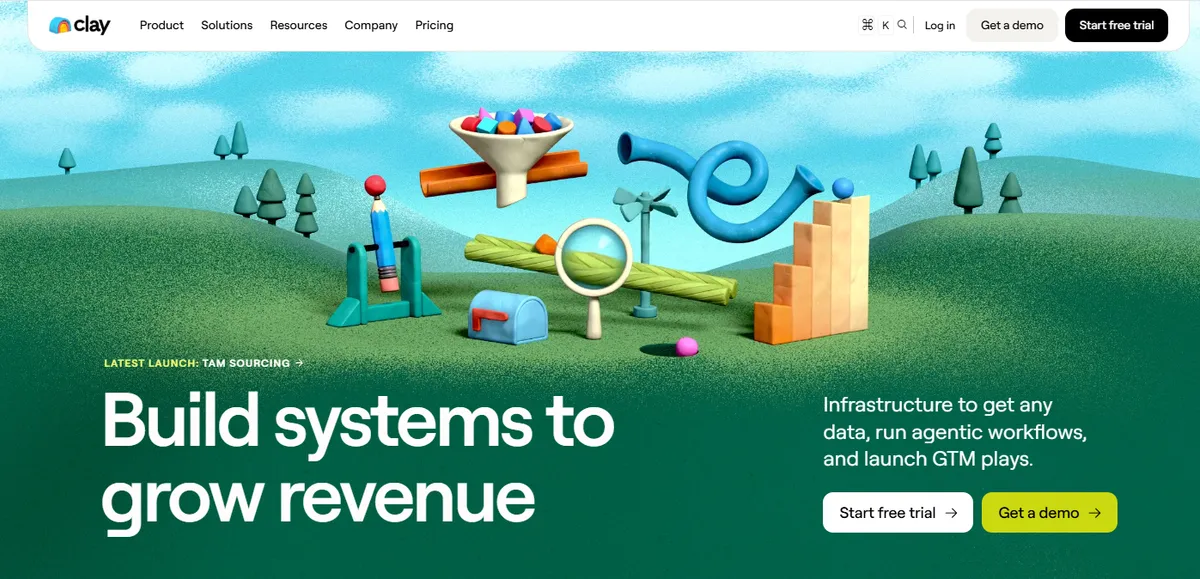
Clay is positioned around data enrichment and multi-source GTM workflows.
Its workflow model allows teams to combine multiple data providers and use conditional logic to transform and enrich records.
Current comparisons commonly position Clay as a flexible enrichment workbench for complex, multi-source GTM workflows.
A typical workflow might look like:

Company
 ↓
Firmographic Enrichment
 ↓
Technographic Data
 ↓
Contact Discovery
 ↓
Verification
 ↓
AI Research
 ↓
CRM
Best for
- Complex enrichment
- Data research
- Multi-source workflows
- Custom GTM data operations
Limitation
The flexibility can create complexity.
Teams need to understand:
- Data providers
- Credits
- Workflow logic
- Enrichment costs
- Data quality
Clay is therefore particularly useful when a GTM Engineer needs granular control over the enrichment process.
3. Apollo: Prospecting, enrichment and sales engagement

Apollo combines prospecting data with sales engagement.
This makes it useful for teams that want fewer separate systems for:
- Contact discovery
- Company research
- Email outreach
- Prospecting
- Basic enrichment
Current GTM tool comparisons position Apollo as a combined prospecting and outreach platform rather than a pure engineering layer.
Best for
- Prospecting
- SMB and mid-market sales
- Contact discovery
- Basic enrichment
- Outbound activation
Limitation
Teams with highly customized enrichment or orchestration requirements may need additional systems.
4. ZoomInfo: Enterprise B2B intelligence
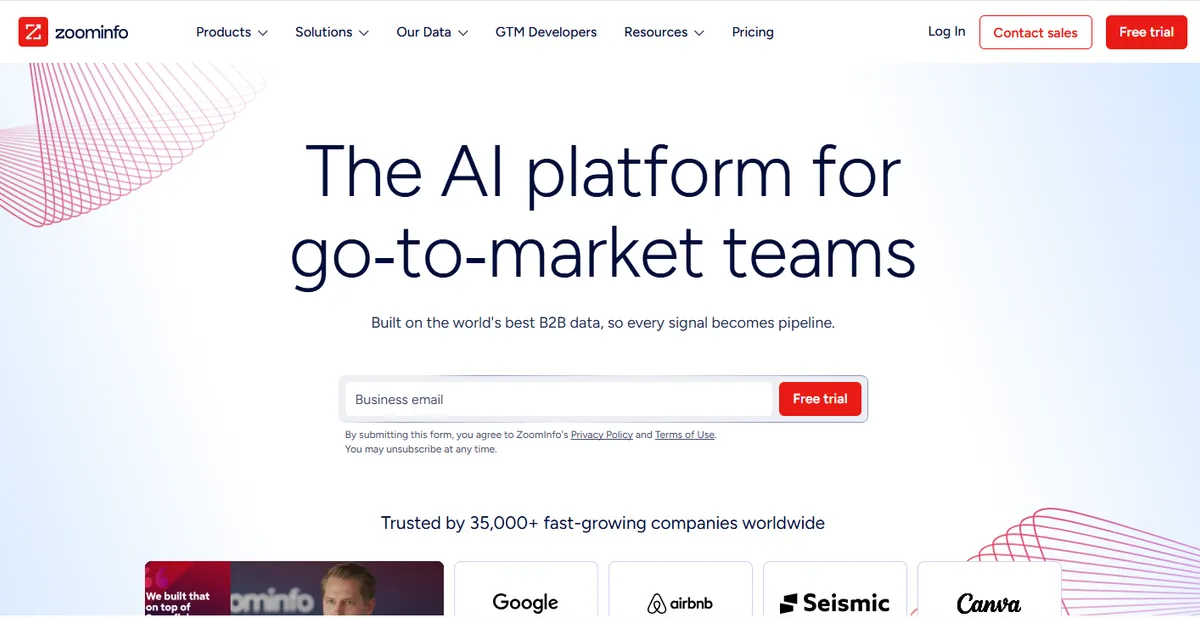
ZoomInfo provides a broad B2B intelligence layer covering company and contact information, firmographic data, technographics, and intent data.
For GTM Engineers, the important capability is not simply database access.
It is the ability to use account intelligence as an input into workflows.
For example:

Account
 ↓
Intent Signal
 ↓
Enrichment
 ↓
ICP Evaluation
 ↓
CRM
 ↓
Sales Workflow
Best for
- Enterprise sales
- B2B intelligence
- Intent data
- Account research
- Large-scale prospecting
Limitation
Enterprise data platforms can become expensive and may be excessive for smaller teams with simpler requirements.
5. n8n: Custom GTM workflow automation

n8n is a workflow automation platform that can connect APIs, databases, CRM systems, enrichment providers, messaging platforms, and other applications.
Its combination of visual workflows and code execution makes it particularly useful for technical GTM teams that need more control than simple no-code automation platforms provide.
A GTM workflow could be:
Salesforce
   ↓
Enrichment API
   ↓
AI Classification
   ↓
Lead Score
   ↓
Slack
   ↓
Sales Engagement
Best for
- Technical GTM teams
- Custom workflows
- API integrations
- Self-hosted automation
- Complex orchestration
Limitation
n8n provides flexibility, but the GTM Engineer is responsible for designing and maintaining the system.
That means technical knowledge becomes important.
6. Outreach: Enterprise sales engagement
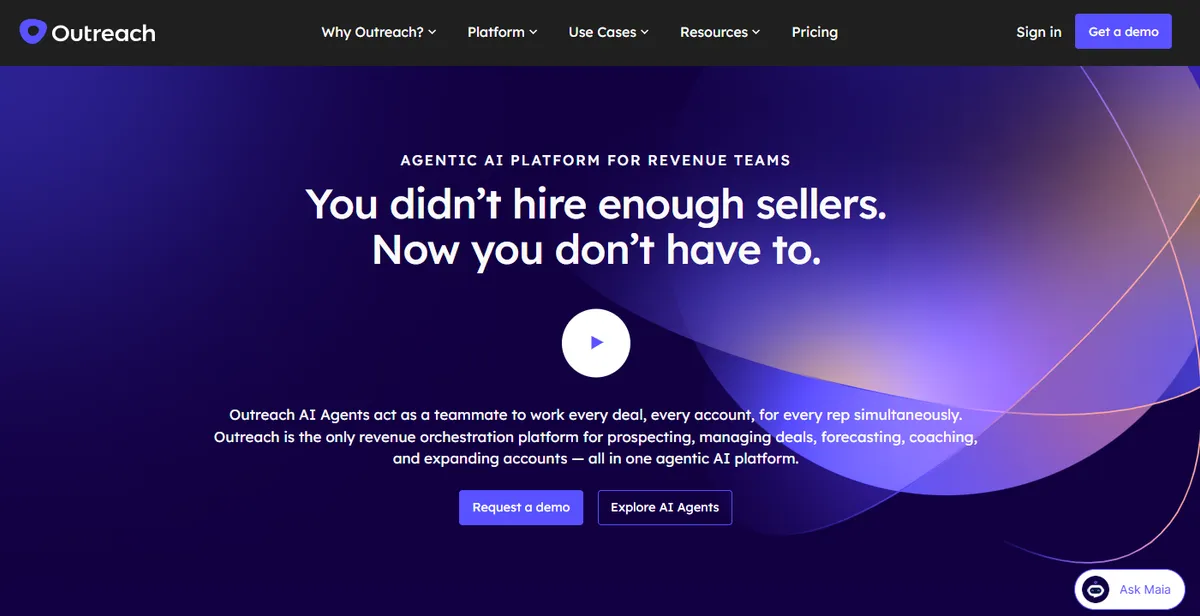
Outreach is primarily a sales engagement platform, but it can become an important activation layer within a GTM Engineering stack.
A GTM Engineer can connect qualified prospects and signals to sales sequences.
For example:
Signal detected → qualification → Outreach sequence
Current tool comparisons emphasize Outreach's sequencing, AI capabilities, integrations, and role as an execution layer for GTM teams. (SyncGTM)
Best for
- Enterprise outbound
- Sales sequencing
- Sales engagement
- Multi-step outreach
Limitation
It is generally more useful as part of a broader GTM stack than as a standalone GTM Engineering platform.
7. Salesloft: Sales engagement and cadence automation
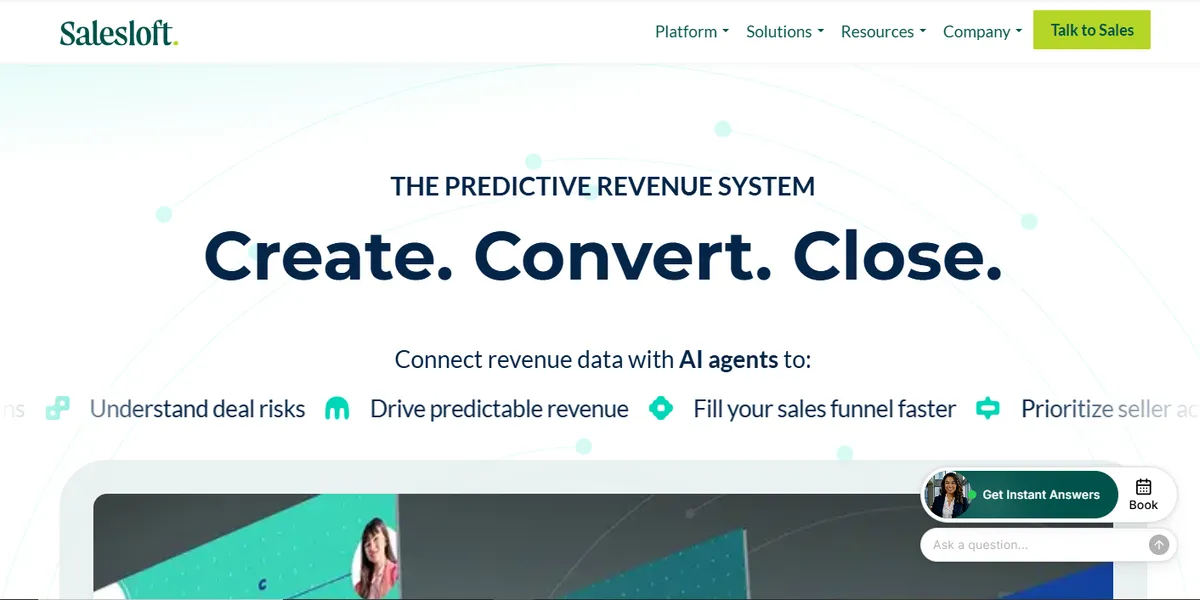
Salesloft provides cadence-based sales engagement across multiple sales activities.
For GTM Engineers, the useful connection is:
GTM Data → Qualified Prospect → Cadence → Engagement Data → Revenue Outcome
This creates a feedback loop between sales execution and GTM intelligence.
Best for
- Sales cadences
- Multichannel engagement
- Sales activity management
- Enterprise sales teams
Limitation
It focuses more heavily on sales execution than on underlying GTM data engineering.
8. HubSpot: CRM and GTM operations

HubSpot can function as the operational center for teams that want CRM, marketing, sales, and workflow automation in one ecosystem.
For GTM Engineering, its value comes from:
- CRM data
- Workflow automation
- APIs
- Integrations
- Lifecycle management
- Sales processes
Current GTM tool research positions HubSpot as a CRM and operations layer rather than a pure enrichment or orchestration platform.
Best for
- Growing GTM teams
- CRM operations
- Marketing-sales alignment
- Workflow automation
- Centralized customer data
9. Gong: Conversation intelligence
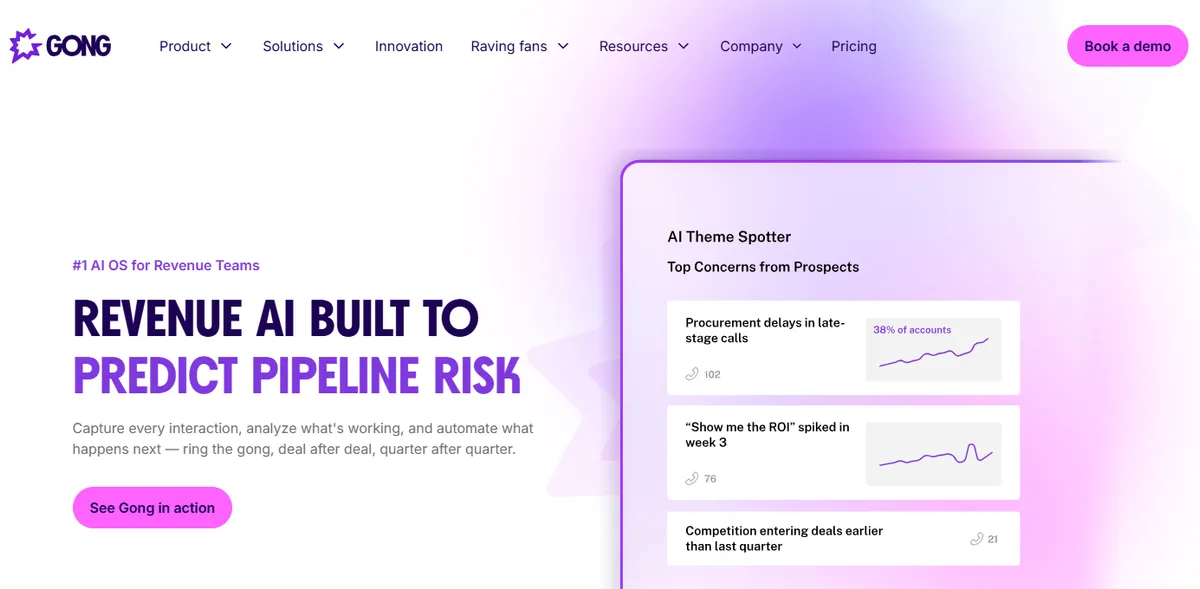
Gong adds a different type of GTM data.
Instead of collecting company information, it analyzes customer conversations.
This can surface:
- Competitor mentions
- Objections
- Pricing discussions
- Buying signals
- Deal risks
- Stakeholder information
The resulting information can feed back into the GTM system.
Sales Call
   ↓
AI Analysis
   ↓
Signal
   ↓
CRM
   ↓
Workflow
   ↓
Sales Action
Gong is therefore useful as a revenue intelligence layer within a broader GTM architecture.
10. Hightouch: Data activation

Hightouch operates at the boundary between data infrastructure and GTM execution.
It can help move warehouse data into operational tools.
This becomes useful when a company has a centralized data warehouse but needs to activate that information in:
- CRM
- Marketing
- Sales
- Customer success
- Advertising
A simplified architecture is:
Data Warehouse
      ↓
Transformation
      ↓
Hightouch
      ↓
CRM / GTM Tools
Current GTM engineering comparisons position Hightouch as a data activation or reverse-ETL layer rather than a prospecting platform.
More GTM engineering tools to consider
The first group of tools covers the core layers of a GTM engineering stack. The next question is how to choose tools for more specialized jobs.
A strong stack does not require one platform for every function.
The better approach is to identify the system requirement first, then choose the tool that satisfies it.
11. SyncGTM: GTM enrichment and orchestration
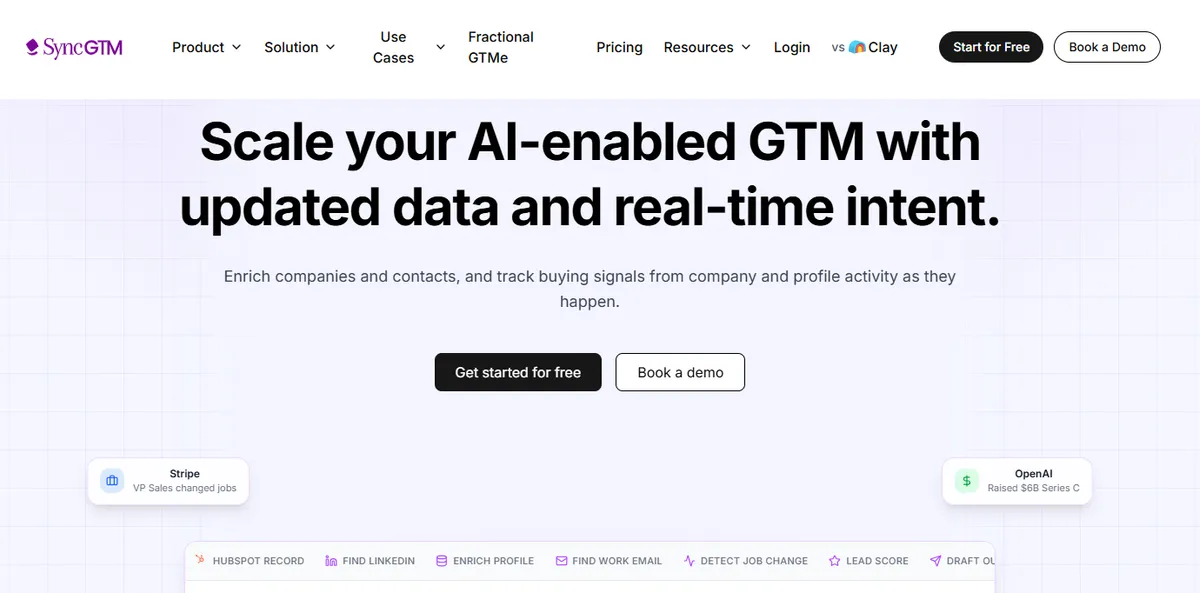
SyncGTM combines enrichment, workflow automation, intent signals, and GTM orchestration in one platform. Its current positioning focuses on waterfall enrichment and multi-step GTM workflows. (SyncGTM)
A typical workflow can connect:
Account
 ↓
Waterfall Enrichment
 ↓
Signal Detection
 ↓
AI Research
 ↓
Lead Scoring
 ↓
CRM
 ↓
Outreach
Best for
- GTM enrichment
- Signal-based workflows
- Data orchestration
- CRM synchronization
- All-in-one GTM automation
Consider it when
You want to reduce the number of separate systems required to move from account discovery to sales activation.
Trade-off
An all-in-one platform can reduce integration complexity, but teams should still evaluate whether its individual capabilities match their specific requirements.
12. HeyReach: LinkedIn-based GTM activation
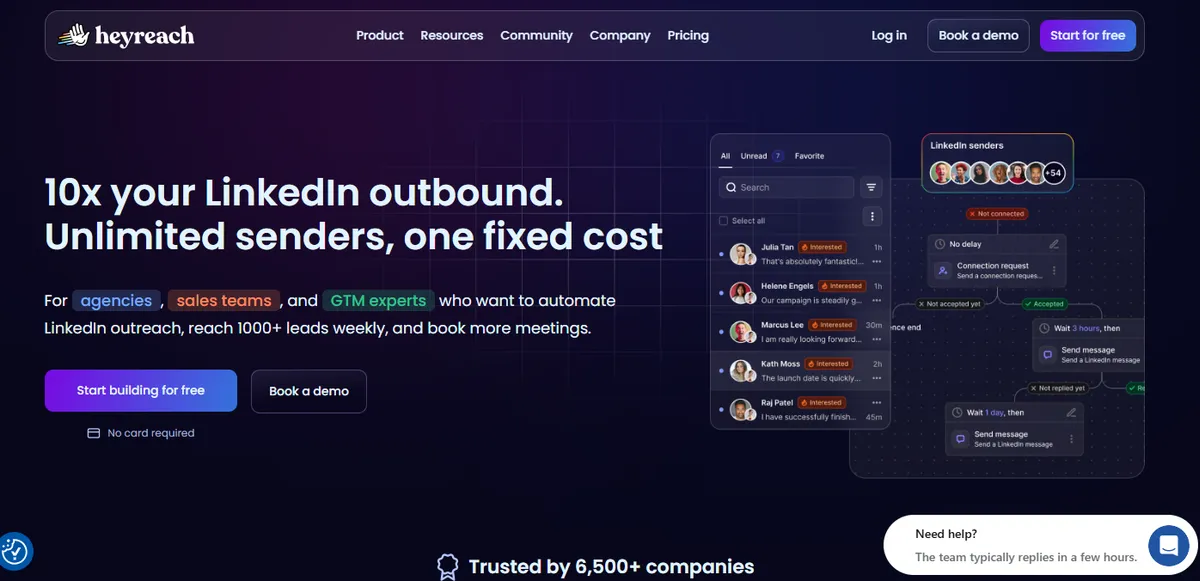
LinkedIn can be another activation layer for signal-based outbound.
Tools such as HeyReach are designed around LinkedIn outreach and can be incorporated into a broader GTM workflow.
A GTM Engineer could build:
ICP Account
 ↓
Signal Detection
 ↓
Contact Identification
 ↓
Qualification
 ↓
LinkedIn Campaign
 ↓
Engagement
 ↓
CRM
Best for
- LinkedIn outreach
- Multichannel outbound
- Account-based campaigns
- LinkedIn prospecting workflows
The important distinction is that LinkedIn automation should generally be treated as the activation layer, not the intelligence layer.
The system should determine who to contact and why before launching outreach.
13. Make: Visual workflow automation
Make is useful when a GTM team needs visual automation without building every integration from scratch.
For example:
Form Submission
 ↓
CRM
 ↓
Enrichment
 ↓
AI Classification
 ↓
Slack
Best for
- No-code automation
- Marketing workflows
- CRM synchronization
- Lightweight integrations
Trade-off
Make can be a good starting point for straightforward workflows, while more complex GTM engineering systems may eventually require deeper API control, custom logic, or an engineering-oriented orchestration platform.
14. Zapier: Simple GTM automation
Zapier is another general-purpose automation layer.
It can connect common GTM applications without requiring extensive development.
A basic workflow might be:
New lead → CRM → Slack notification → Task creation
Best for
- Simple automations
- Small GTM teams
- Prototyping
- Standard integrations
Trade-off
As workflows become more complex, teams should evaluate branching, error handling, data transformations, API control, execution costs, and maintainability rather than assuming a simple automation platform will remain the best long-term architecture.
15. Attio: Flexible CRM layer
Attio can serve as a CRM and data layer for teams that want a flexible, modern customer database.
For GTM Engineering, the important capability is the ability to structure customer records and connect them to automated workflows.
A possible architecture is:
External Data
 ↓
Enrichment
 ↓
Attio
 ↓
Signal
 ↓
Workflow
 ↓
Sales Action
Best for
- Modern CRM implementations
- Flexible account data
- Startup GTM teams
- Custom CRM workflows
The right CRM should be selected based on the company's sales process, data model, integrations, and operational requirements rather than interface preference alone.
Best GTM engineering tool for data enrichment
The answer depends on the complexity of the enrichment workflow.
Choose Clay when:
- You need many enrichment sources.
- You want granular control.
- Your GTM Engineer is comfortable with complex workflows.
- You need AI-assisted research.
Choose ZoomInfo when:
- Enterprise B2B intelligence is a priority.
- You need broad company and contact data.
- Intent data is important.
Choose SyncGTM when:
- You want enrichment combined with orchestration.
- Waterfall enrichment is central to the workflow.
- You want fewer separate systems.
Current 2026 comparisons position Clay around flexible multi-source enrichment, ZoomInfo around enterprise intelligence, and SyncGTM around combined enrichment and orchestration.
Best GTM engineering tool for workflow automation
n8n
Best when technical control, APIs, custom logic, and self-hosting matter.
Make
Best when visual workflow building is important.
Zapier
Best for simpler integrations and fast implementation.
The choice should depend on workflow complexity rather than brand recognition.
Best GTM Engineering Tool for Prospecting
For prospecting, consider:
- Apollo
- ZoomInfo
- Clay
- Other specialized data providers
The evaluation should include:
- Coverage
- Data accuracy
- Contact freshness
- Filters
- Export/API capabilities
- Enrichment depth
- Cost per usable record
A large database is not necessarily a better database.
The relevant metric is usable account coverage for your ICP.
Best GTM Engineering Tool for AI Research
AI research can be implemented through several approaches.
Embedded AI
AI is built into a GTM platform.
General-purpose LLM
An LLM is connected through an API.
AI agent
An agent can retrieve information, call tools, perform multiple steps, and return structured results.
For example:
Account
 ↓
Research Agent
 ├── Website
 ├── News
 ├── Jobs
 ├── Technology
 └── CRM
 ↓
Account Brief
The best architecture depends on whether research is occasional or needs to run automatically across thousands of accounts.
Best free GTM engineering tools
A GTM Engineer does not need to start with an expensive enterprise stack.
Several categories have free or low-cost entry points.
n8n
Useful for technical teams that want workflow automation and can use self-hosting.
HubSpot
Useful when the free or entry-level CRM capabilities match the team's needs.
Zapier
Useful for testing simple workflow concepts.
Make
Useful for prototyping visual automations.
AI APIs
Useful for testing classification, research, and summarization workflows.
The goal of a free stack should be validation, not permanent avoidance of paid infrastructure.
How to build a GTM engineering tech stack?
Do not start with a shopping list.
Start with the revenue workflow.
For example:
Problem
Sales representatives spend four hours each day researching accounts.
Required system
Automated account research
Required capabilities
- Account identification
- Enrichment
- Web research
- AI interpretation
- CRM update
Potential stack
CRM
↓
Enrichment
↓
AI Research
↓
Workflow Automation
↓
CRM
Only after defining the architecture should you choose individual tools.
A lean GTM engineering stack
A small company may only need:
CRM + Enrichment + Automation + AI
For example:
CRM
 +
Enrichment
 +
n8n / Make
 +
AI
This can support:
- Lead enrichment
- Account research
- Lead routing
- CRM updates
- Basic signal monitoring
The advantage is low complexity.
A Mid-market GTM engineering stack
A growing company may require:
CRM + Data + Enrichment + Signals + Automation + Sales Engagement + Analytics
The architecture might look like:
Data Sources
 ↓
Enrichment
 ↓
Signals
 ↓
AI
 ↓
Orchestration
 ↓
CRM
 ↓
Sales Engagement
 ↓
Analytics
At this stage, integration architecture becomes increasingly important.
An enterprise GTM engineering stack
Enterprise organizations may require:
- Data warehouse
- CRM
- Multiple enrichment providers
- Intent data
- Signal intelligence
- Workflow orchestration
- AI agents
- Sales engagement
- Conversation intelligence
- BI
- Governance
A simplified architecture is:
Data Warehouse
                      ↓
               Customer Data Layer
                      ↓
        ┌─────────────┼─────────────┐
        ↓             ↓             ↓
    Enrichment     Signals        Product
        ↓             ↓             ↓
        └─────────────┼─────────────┘
                      ↓
                 AI Layer
                      ↓
               Orchestration
                      ↓
                    CRM
                      ↓
           Sales / Marketing / CS
                      ↓
                 Analytics
At this point, GTM Engineering becomes infrastructure engineering for the revenue organization.
How many GTM engineering tools do you actually need?
There is no fixed number.
A useful principle is:
Use the smallest number of tools that can reliably execute the required GTM system.
For many teams, the stack can be organized into five core layers:
1. CRM
2. Data / Enrichment
3. Intelligence / Signals
4. Automation / Orchestration
5. Activation
AI can operate across all five layers.
Analytics then closes the feedback loop.
The GTM Engineering Tool Evaluation Checklist
Before purchasing a tool, ask:
Data
- Does it provide the data we actually need?
- How fresh is the data?
- Can we verify important fields?
Integration
- Does it have an API?
- Does it support webhooks?
- Does it integrate with our CRM?
- Can it connect to our existing automation?
Workflow
- Can we create conditional logic?
- Can we transform data?
- Can we handle errors?
- Can we trigger actions automatically?
AI
- Is AI actually useful?
- Can outputs be structured?
- Can we control AI behavior?
- Can we measure accuracy?
Economics
- Is pricing per seat?
- Per record?
- Per credit?
- Per action?
- Are API calls included?
Operations
- Who will maintain it?
- What happens when it fails?
- Can we replace it later?
- Does it create vendor lock-in?
GTM Engineering Tools and the Role of the GTM Engineer
The GTM Engineer should not become the person responsible for maintaining an enormous collection of tools.
The role is to design the system.
A good GTM Engineer asks:
What decision are we trying to automate?
What data is required?
Where does that data originate?
How reliable is it?
What should happen when the condition is met?
Who owns the resulting action?
How will we measure whether the workflow worked?
That systems-thinking approach is more important than knowing every GTM platform.
Conclusion
GTM Engineering tools are not simply another category of sales software.
They are the components used to engineer the revenue system.
The strongest architecture connects:
Data → Enrichment → Signals → AI → Decision → Workflow → CRM → Sales → Revenue
A small company may need only a CRM, enrichment platform, automation layer, and AI.
A larger organization may need a warehouse, multiple data providers, signal intelligence, orchestration, AI agents, sales engagement, conversation intelligence, and analytics.
The right stack is determined by the workflow, not by the number of tools available.
The central question for a GTM Engineer should therefore be:
What revenue process are we trying to make faster, more accurate, more scalable, or more intelligent?
Once that question is answered, the tool selection becomes much easier.
And that is the real purpose of GTM Engineering tools: not to add more software to the GTM stack, but to turn the stack into a connected, measurable, and increasingly automated revenue engine.
Frequently Asked Questions
What are the best GTM tools?
There is no universal best GTM tool. The right stack depends on the specific problem. Clay is strong for enrichment workflows, ZoomInfo for enterprise B2B intelligence, n8n for customizable workflow automation, HubSpot for CRM and operations, Outreach and Salesloft for sales engagement, and Hightouch for data activation.
What does GTM stand for in engineering?
GTM stands for Go-to-Market. In an engineering context, GTM Engineering refers to building technical systems that improve the execution of sales, marketing, customer acquisition, and revenue processes.
What is the best GTM engineering tool?
There is no single best tool. The best choice depends on the workflow. For enrichment, evaluate platforms such as Clay or ZoomInfo. For workflow automation, consider n8n, Make, or Zapier. For GTM-specific orchestration, evaluate platforms designed around signals, enrichment, qualification, routing, and revenue workflows.
What is the difference between GTM tools and GTM engineering tools?
GTM tools cover the broader software ecosystem used by revenue teams. GTM engineering tools focus more specifically on building, connecting, automating, and orchestrating the technical systems behind those processes.
Are there free GTM engineering tools?
Yes. Tools such as n8n offer self-hosted options, while several automation, CRM, and AI platforms have free or entry-level tiers. Free tools are useful for prototyping, but production systems should be evaluated based on reliability, scale, security, and total cost of ownership.
Should I use one GTM platform or multiple tools?
Use multiple tools when specialization creates meaningful value. Use a consolidated platform when it reduces integration complexity without sacrificing required functionality. The objective is not maximum consolidation or maximum flexibility. It is the most reliable architecture for the business.
How do I choose a GTM engineering stack?
Start with the revenue process. Map the required data, decisions, actions, and systems. Then select tools that satisfy those requirements. Evaluate integration depth, data quality, automation, AI capabilities, pricing, reliability, and maintenance requirements before purchasing.
Let's build
what your
company needs.
Drop your email. We'll send The Custom Agent Blueprint on what we'd build first for a company like yours, before you ever take a meeting.